
BLOG
french wine 101
One could argue that France is the philosophical heart of fine wine. Much of what the world now does, from vineyard practices to winemaking techniques, can be traced back to the viticultural motherland. Here are some must-know terms for exploring the wines of France.
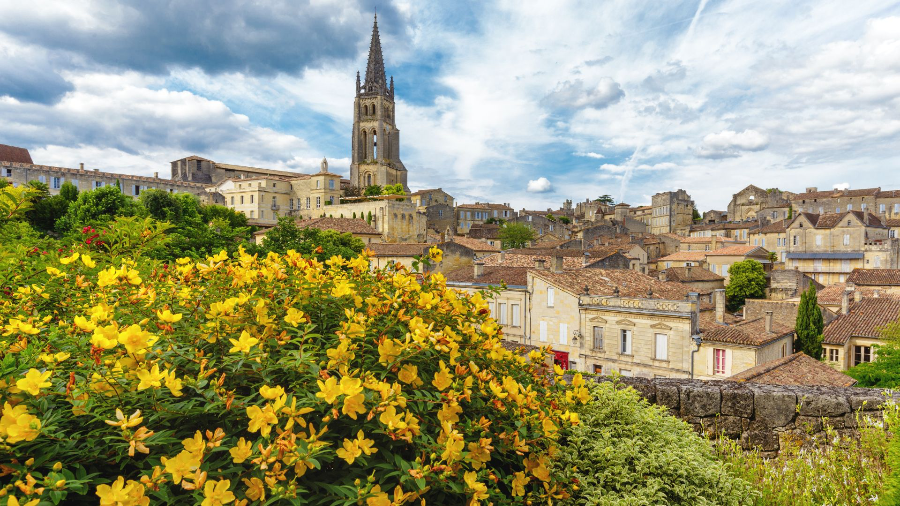
A History of innovation
There’s a long history of innovation in Bordeaux; introducing topping up and sulphur to produce the ‘New French Claret’ in the 17th century, solving Mildew with the Bordeaux mixture in 1878 to the introduction of stainless steel in the 1960’s, when Château Haut Brion was accused by its peers for producing wine made in a dairy!
Following on from The Wine Scholar Guild’s excellent October Bordeaux wine tour, our locally based Tour Manager, Sarah, is continuing her series of articles about travel tips to Bordeaux. This third blog looks at some of Bordeaux’s top wine-shops.
Unlike many other wine regions in the world, the top Bordeaux Châteaux are often not the best place to purchase their wines: they sell mostly through the Place de Bordeaux’s wine négociants and although the Châteaux do sometimes keep back a small percentage of their wines for over the counter sales, this may not be the best place to find good prices and older vintages. So, for these wines, do look at the following wine shops.
There have been moments in my career as a professional winophile where I’ve realized I haven’t retained a bit of information that perhaps I should have learned in grade school had I been paying attention. Everyone needs a refresher once in a while and this series of blog posts aims to fill in possible gaps of knowledge that your grade-school mind may not have realized you would use in your fabulous wine career.
Estuary is a term that surfaces a lot when talking about Bordeaux. Though it is often used interchangeably with the word “river,” estuary has a very specific meaning.
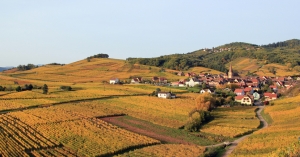
There’s no wine region I enjoy visiting more than Alsace.
It’s beautiful, of course – and not just the half-timbered houses around which a profusion of flowers seem to float, or the grand hillside vineyards romping up to the forested Vosges mountains, always somehow bigger and more imposing in scale than those of Burgundy. The growers are fascinating characters, too, as if their historical and geographical position, wedged between (and much fought-over by) France and Germany, has given them an independence of thought which eludes those with a more settled position in each wine culture.
Then there’s the wines. It’s commonplace to say that Alsace wines are underappreciated -- but it’s true. For me, no white wine region can offer more diversity and intrigue than Alsace, nor does any single regional range of white wines appeal more to my palate...
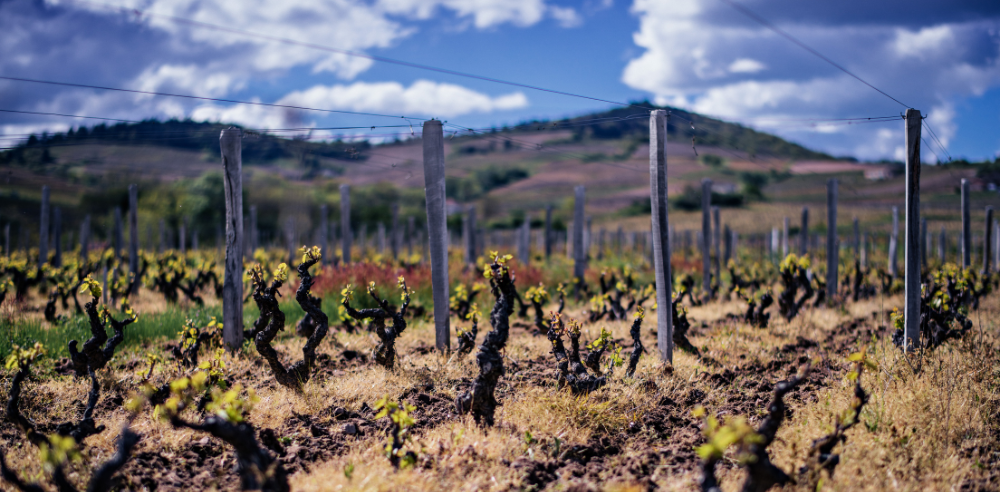
WSG is proud be the first Educational Partner of The Old Vine Conference. Read more to find out how this dynamic non-profit organization is actively creating a global network of old-vine disciples while raising awareness through education.
The economic and social relevance of old vines is real, but the structure of the global wine industry stacks the odds against the regenerative commercial viability of old vines. The result is that healthy old vineyards of cultural resonance and unique qualitative potential are lost because they can’t be made to pay.
The Old Vine Conference is a non-profit organisation whose aim is to bring together a global network to create a new category for wine from heritage vineyards. The Old Vine Conference works to safeguard old vines of cultural and ecological value by connecting, educating and inspiring the global wine industry through conferences, research, partnerships, tastings and fieldtrips.
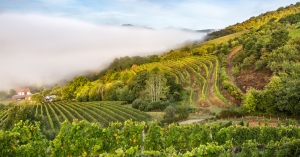
What is France’s greatest undiscovered wine region? Where do you find the greatest value for money in French wine? Where would you look around France to find potential fine-wine quality at affordable wine prices? Three questions … and from me the same answer to each: South West France.
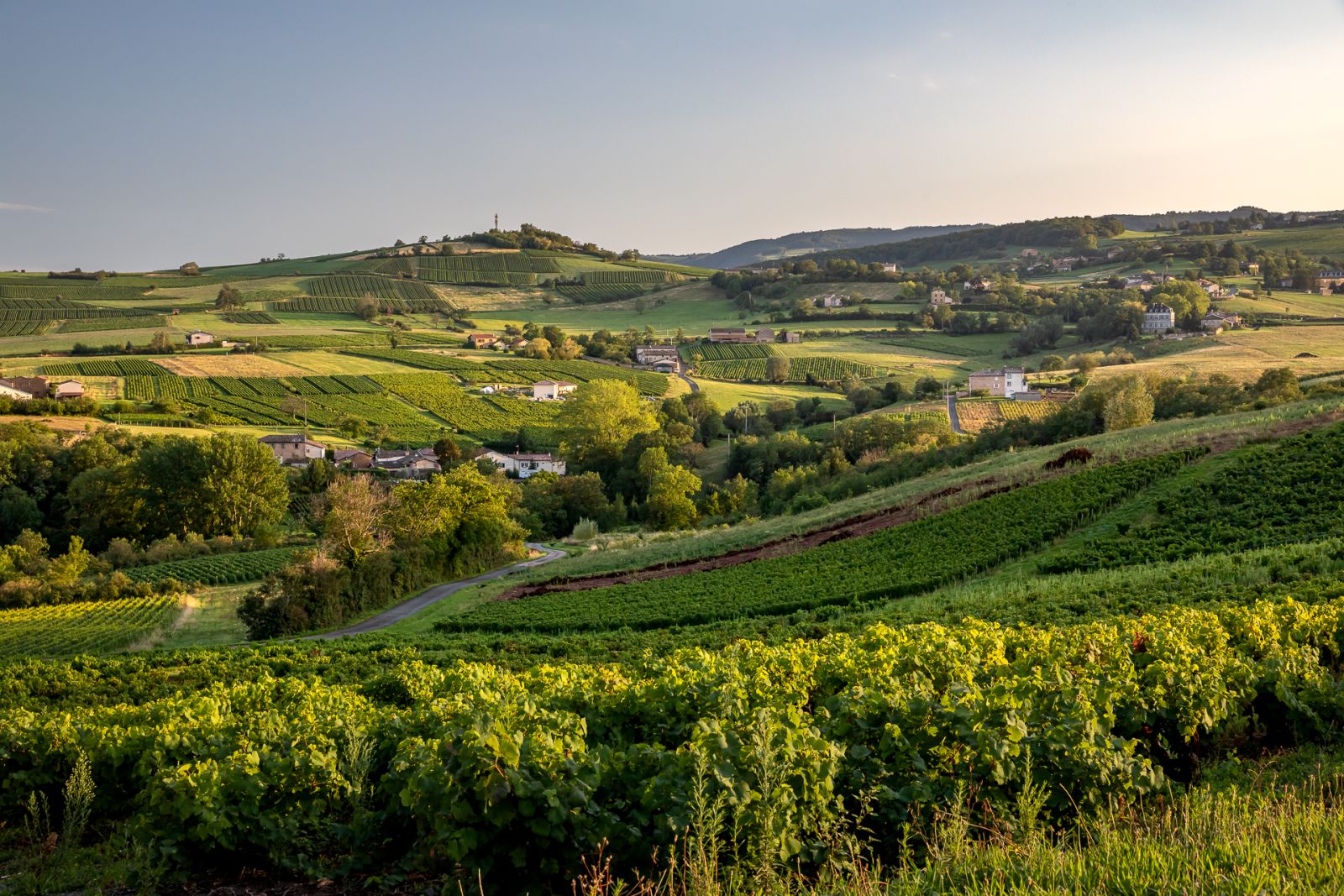
Over the past 20 years, the restoration of Beaujolais has been one of the great success stories in French wine. For decades it was best known for simple Beaujolais Nouveau, rushed out for consumption on the third Thursday of November every year, but the hullaballoo around this marketing stunt is now dissipating as the potential quality of its cru wines draws the spotlight.
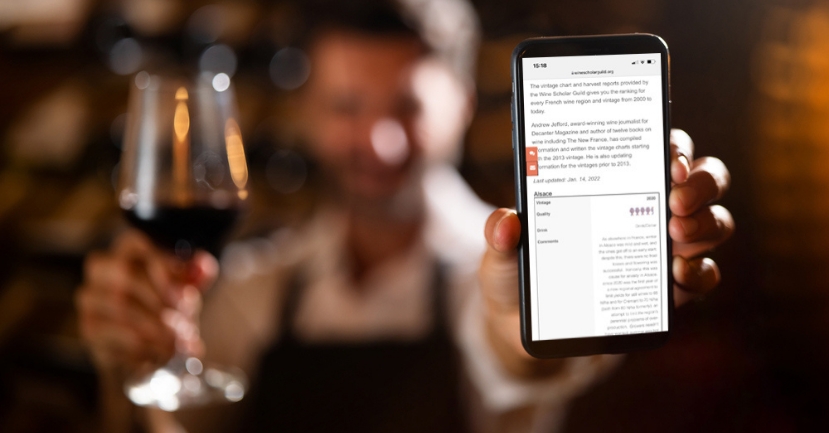
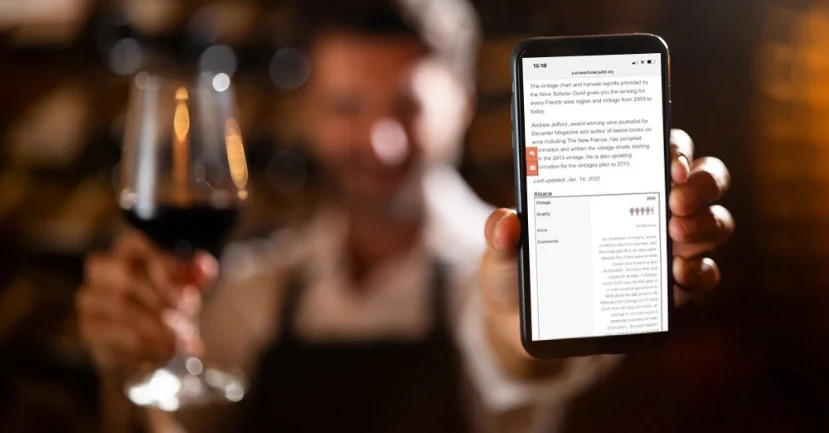
The vintage chart and harvest reports provided by the Wine Scholar Guild gives you the ranking for every French wine region and vintage from 2000 to today.Andrew Jefford, award-winning author and columnist in every issue of Decanter and World of Fine Wine, Co-Chair Decanter World Wine Awards; Vice-Chair Decanter Asia Wine Awards, gives us his insight about the 2020 vintage in France.
The COVID pandemic made 2020 difficult in France as elsewhere in the world, but France’s winegowers had every reason to feel a sense of relief and gratitude as the year ended. Their future prosperity depends on both the quantity and the quality of each year’s harvest. Every French wine region was satisfied with quantities in 2020 and thrilled with quality. Sales may have been difficult in 2020 with the restaurant trade in abeyance and export markets disrupted, but after the run of good to great French vintages since 2015, no one had cause to complain about stocks.
The 2022 vintage was, in general, a great year for France. Weirdly. Look at the data. It shouldn’t have been: the gauges for both drought and heat were often flashing red. What happened?
Over the past 10 years, interest in Aligoté has been rising in Bourgogne–and so have prices. Charlie Geoghegan examines the ascendency of this lesser-known white grape.
Poor Aligoté. It’s had a difficult few centuries as Bourgogne’s other white grape. Charges levelled against Aligoté include its excessive acidity, unpleasant tartness and tendency to taste rather dilute. Reference books will tell you how much more palatable it becomes with a dash of crème de cassis (blackcurrant liqueur). It’s not a flattering depiction. Thankfully, though, it’s no longer an accurate one.
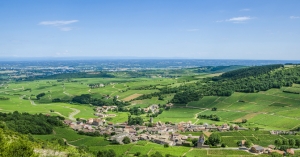
As a wine region, Burgundy embodies both the past and the future. On the one hand, Grands Crus that have been celebrated for centuries remain in the hands of multi-generational family domaines. On the other hand, outside investment, adjustments to the appellation system, and the realities of climate change (which have necessitated adaptations in viticulture and winemaking) have all combined to bring about change in recent years. This duality lies at the heart of modern Burgundy, and here to sort much of it out for us is acclaimed wine writer and critic Andrew Jefford. Below, he takes a look at the numbers that have shaped Burgundy’s recent history, and what that means for its future.