BLOG
Is Wine Education Teaching for the Wrong Era?
Wine Scholar Guild
Insights and Opinions
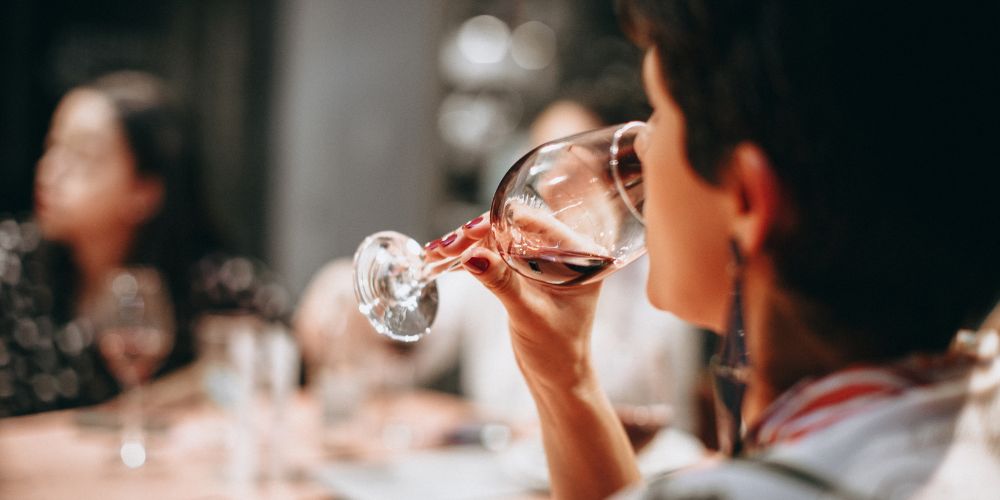
Wine education has historically been built around a sensible goal: creating structure in a complex world. For decades, education has helped professionals and enthusiasts navigate regions, grapes, appellations, tasting frameworks and technical language — all in a wine industry that has become increasingly globalised and commercially sophisticated.
That model had real value; it created a common vocabulary and brought rigour to a field once shaped as much by intuition and anecdote as by formal study. The model also helped establish standards for trade professionals, sommeliers, retailers and educators, and gave generations of learners a clear pathway into wine.
But the conditions that shaped modern wine education are changing. Information is no longer scarce. Consumer expectations are shifting, and younger drinkers are approaching wine differently from previous generations. Questions around transparency, sustainability, authenticity and producer identity now matter more deeply than they once did. At the same time, AI is forcing education providers across all fields to rethink the value education truly offers when facts can be retrieved instantly.
The question is not whether wine education still matters, but rather what wine education should look like in an age of information abundance.
When memorisation was the right tool
Much of traditional wine education emerged in a postwar world, shaped by standardisation, the growth of global trade and technical codification. As wine traveled further, appellation systems matured and hospitality expanded, creating a practical need for consistency and a shared language.
Students of wine learned grape varieties, regional rules, standardised aromas, flavours and classification systems. Great emphasis was placed on objective analysis. Blind tasting, technical precision and recalling facts became markers of seriousness and expertise — and were efficient, scalable ways to educate large numbers of learners. For its time, this made sense; in a fragmented global market, knowledge transfer was essential.
Yet this framework needs to be revisited. Increasingly, wine drinkers are questioning long-held assumptions about how wine should be understood and evaluated. Is there a single correct reading of a wine? Is typicity as fixed as we once believed? Is expertise best measured by factual recall and conformity? Those assumptions once helped create clarity. Today, some may limit how wine is understood and experienced.
The AI shift: when information stops being the product
One of the biggest changes facing education is not only technological but also philosophical.
AI can now summarise appellation law, compare regions, explain viticulture concepts, generate tasting grids, create flashcards and test factual recall within seconds. Search tools and digital platforms can retrieve maps, classifications and producer information faster than most textbooks ever could.
This does not make foundational knowledge irrelevant. But it changes the educational proposition. If information is abundant, then education can no longer justify itself primarily through information transfer.
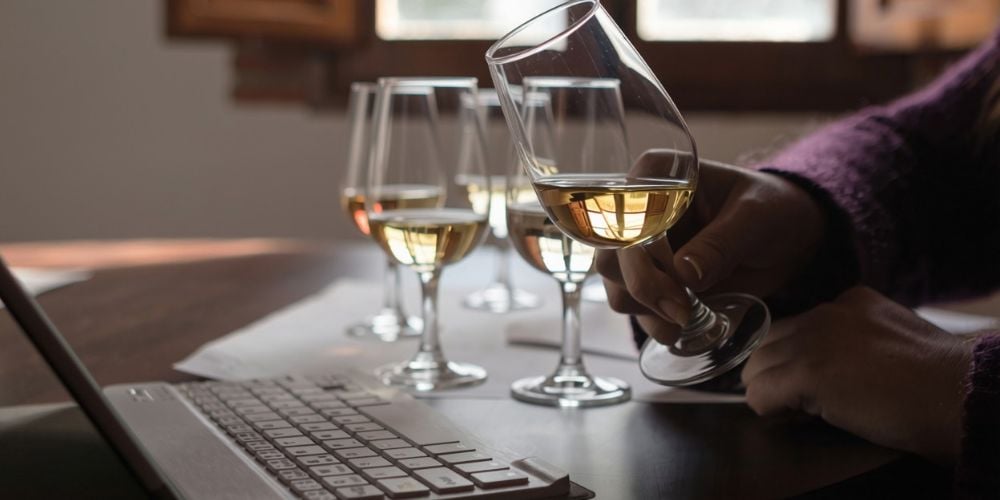
Across industries, the most valued skills increasingly centre on interpretation, judgment, communication, adaptability and critical thinking. Wine education is unlikely to be exempt from this shift. Knowing the crus of Beaujolais or the permitted varieties of a classification system may still matter. Increasingly, however, the deeper question is whether learners can connect facts to meaning.
However, can students understand why place matters? Why and how producer choices and intention shape expression? Why consumers respond emotionally, culturally or socially to one bottle and not to another? In this environment, memorisation remains useful, but it is simply no longer enough.
When wine becomes more complex than the framework
Traditional tasting and teaching models often rely on typicity, or the expected stylistic character of a grape, region or appellation. Again, this has value. Typicity orients students, provides a useful baseline and helps them develop reference points. But wine itself has become harder to reduce to static expectation.
Climate change is altering growing conditions and shifting long-held stylistic assumptions. Farming philosophies differ widely. Harvest timing, extraction, élevage, intervention choices and winemaking intentions increasingly shape identity. Producer decisions often matter as much as geography. At the same time, many of today’s most compelling wines deliberately resist formula, whether through low-intervention approaches, unconventional élevage or decisions to work outside established appellation systems.
The issue is not that typicity has become obsolete. It is that typicity may need to be treated more as a starting point than a final truth. The most interesting wines often live where expectation begins to blur.
Blind tasting and the performance problem
Few topics in wine education generate stronger symbolic value than blind tasting. Blind tasting remains a valuable discipline. It can help learners sharpen observation, train sensory awareness, separate assumptions from evidence, and build discipline and humility. But in many educational spaces, blind tasting has become a main marker of seriousness and legitimacy. When this happens, wine risks becoming a performance rather than an encounter.
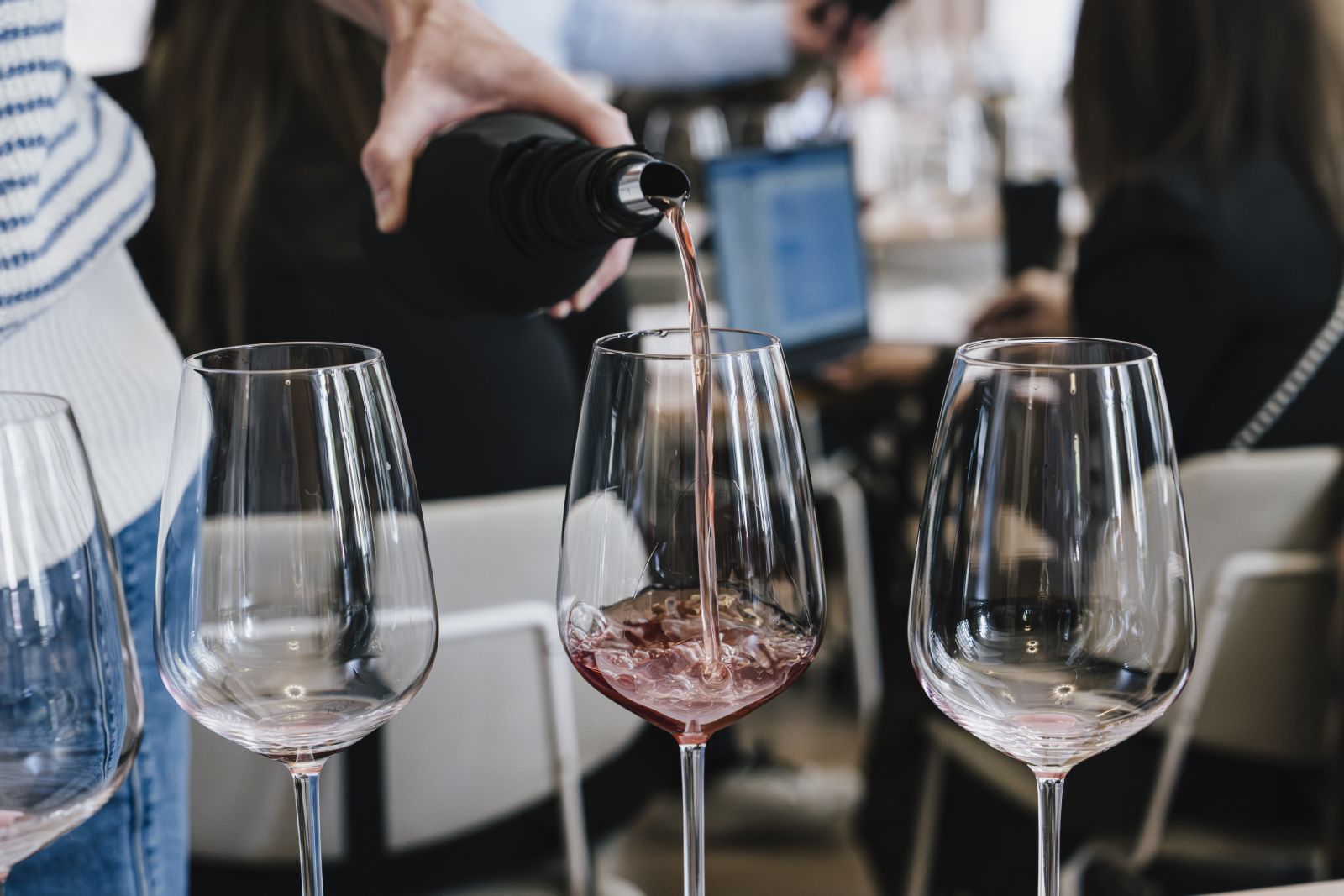
For most drinkers, wine is not experienced in a neutral room under exam conditions. It is encountered socially, culturally and emotionally. It is shaped by label, producer, memory, occasion, food, conversation and place.
If education overprioritises technical decoding while underprioritising interpretation, confidence and connection, it may unintentionally narrow wine’s appeal. The issue is not to reduce the importance of blind tasting, rather to place it alongside the other ways people actually experience wine: through culture, context, pleasure and human connection.
Why this matters beyond the classroom
This debate is larger than curriculum design. The wine industry faces real pressures from changing consumption habits, increased competition from other beverage categories, cultural scrutiny around alcohol, and a growing need to connect meaningfully with younger audiences.
If wine education feels intimidating, overly coded or disconnected from lived experiences, it may alienate potential future wine lovers.
If it focuses only on trophy wines, static hierarchies and technical correctness, it may fail to reflect the wines and values that many younger consumers increasingly care about: transparency, authenticity, sustainability, producer identity and cultural meaning.
If it ends at certification rather than lifelong engagement, it may miss an opportunity to deepen loyalty. Good education does not simply explain wine; it shapes how people relate to it and how they see it as a valuable part of culture.
A more human-centred opportunity
This is where the opportunity lies. Wine education does not need to become less rigorous. But it may need to become more human-centred.
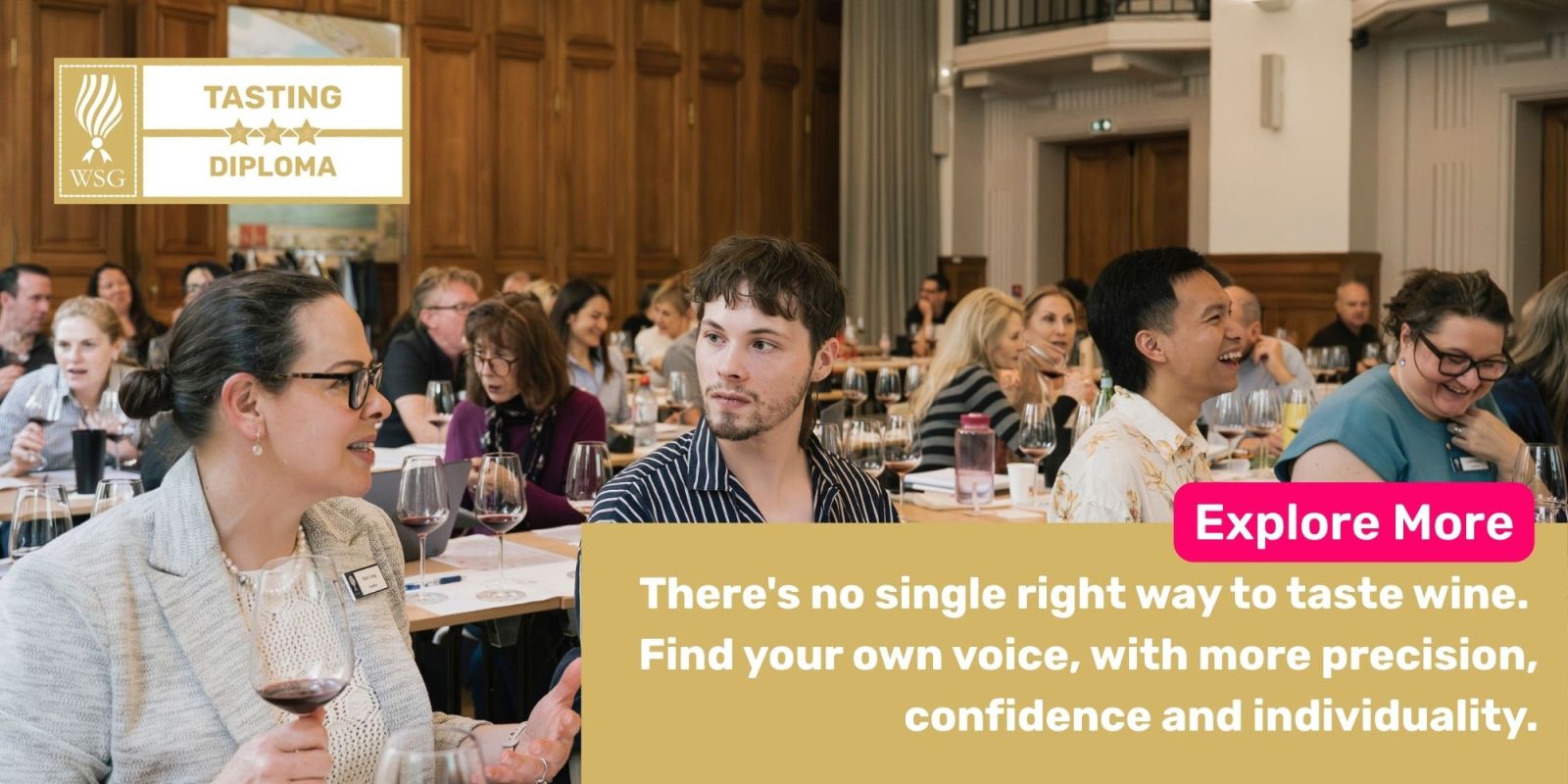
At WSG, this thinking has informed the development of the WSG Tasting Diploma and additional forthcoming tasting programs in development. Our goal is not to teach wine only through systems and classifications, but also through people, philosophy and producer choices.
This means creating more room for dialogue, ambiguity, and contextual thinking to help learners understand not only what a wine is but also why it matters. The goal is to expand education beyond isolated certification towards more continuous, community-based learning rooted in curiosity and lived wine culture. We also aim to restore something that too much formal education has quietly squeezed out: the joy, emotion and genuine pleasure that drew most of us to wine in the first place.
In a fragmented, digitally saturated world, wine remains one of the most relational and cultural products available. Education can help preserve that strength.
Redefining rigour
Perhaps the most important distinction is that evolving wine education does not require rejecting expertise.
Foundational knowledge still matters. Blind tasting still matters. Technical understanding still matters. Structure still matters. But rigour may increasingly need to be defined not only by recall, but by discernment and critical thinking.
Can a learner connect geography to expression? Can they interpret variation rather than memorise stereotype? Can they communicate nuance? Can they evaluate claims critically? Can they understand a producer intention and communicate it clearly?
At a time when wine faces shifting generational habits, evolving expectations and growing competition for attention, education may be one of the industry's most important tools — not simply to transmit knowledge but also to shape how people relate to wine. The future of wine education may depend less on helping learners identify what is in the glass and more on helping them understand why it matters.
The future of wine education
Wine education is not facing obsolescence. It is facing an inflection point. The systems built in the last century helped wine become more legible, global and respected. But the next chapter may require something broader: education that still values expertise while helping people engage with wine as a living agricultural, cultural and human product.
At a time when wine faces shifting generational habits, evolving expectations and growing competition for attention, education may be one of the industry's most important tools. Not simply because it transfers knowledge, but because it shapes how people relate to wine. The future of wine education may depend less on helping learners identify what is in the glass and more on helping them understand why it matters.