BLOG
Wine Education: Building a New Future Together
Julien Camus
Insights and Opinions
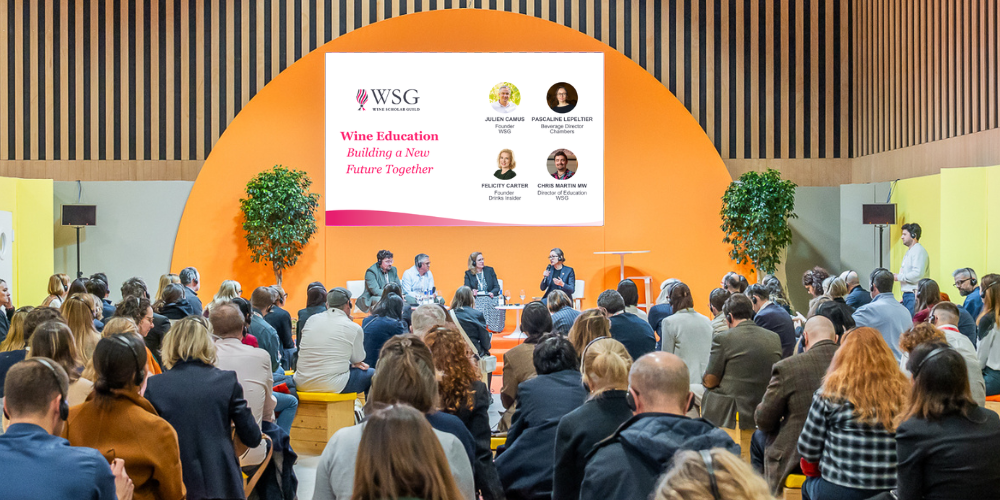
This article explores themes connected to the panel discussion led by WSG at Wine Paris on February 9, 2026.
Wine is one of the most culturally rich, emotionally resonant traditions in the world. It connects people and place like few earthly things can. Yet the wine industry finds itself on the edge of a precipice. Declining consumption, shifting demographics, climate chaos and fierce competition from spirits and non-alcoholic alternatives all call wine's future into question. External forces aren't the only culprits. Within the industry, wine education itself has unwittingly become part of the problem—actively contributing to the disconnect between wine and the people who might love it.
The Illusion of Objectivity
A point of view is always a view from somewhere. Modern wine education emerged from the brave new world of post-WWII London, shaped by the commercial needs of a booming hospitality trade. Its standardised approach brought rigor and consistency to a rapidly globalising market. For decades, this paradigm, perfectly aligned with an age of standardisation and mass culture, served the industry well.
But in chasing legitimacy through scientism, wine education lost its way, mistaking measurement for meaning. This led to a false ideal of objectivity: sterilised tasting notes, rigid assessment grids and true/false exams. Students were conditioned to ask technical questions—what percentage of new oak? how many grams of residual sugar?—as if wine were a lab specimen rather than a living expression of people and place.
The result: wine tasting has become a soulless exercise in conformity—a mechanical process better suited to algorithms than human sensibility. Personal responses are repressed. Emotional connections are dismissed as unprofessional. Wine knowledge becomes a gatekeeping tool, guarded by rituals and language that alienate more than enlighten.
Learners feel pressure to perform rather than discover, to prove and master rather than share and wonder. The intimate encounter that might spark a lifelong love affair with wine is systematically extinguished.
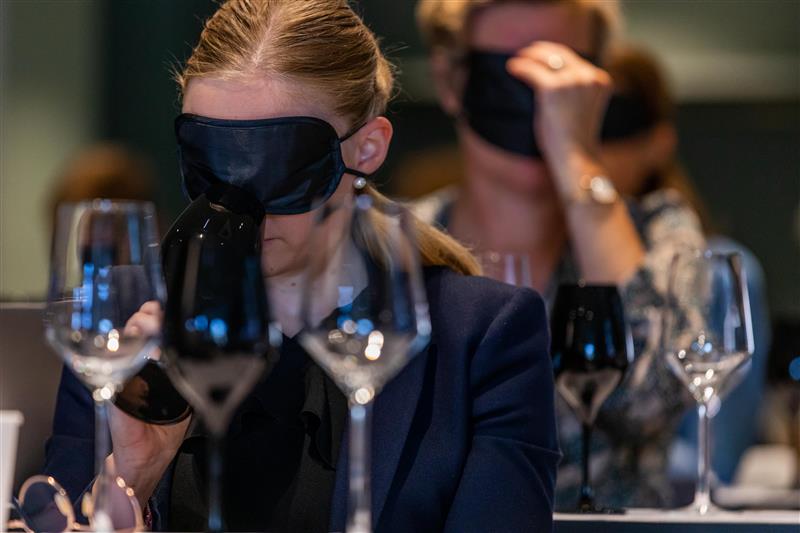
Nowhere is this performative pressure more evident than in the fetishization of blind tasting. Elevated as the ultimate skill, blind tasting has little real-world relevance. It creates false hierarchies, intimidates newcomers and turns wine into a competitive sport rather than a shared experience.
Teaching Stereotypes as Truth
In its dogmatic slumber, wine education still teaches "typicity" as gospel. Wines from region X taste like Y. Sauvignon Blanc equals gooseberries and cat pee. Cabernet Sauvignon means blackcurrant and cedar. Chablis is steely and mineral. These templates are memorised and summoned as automatic responses even before a wine has been tasted.
The problem is that, when these stereotypes do exist, they generally describe commodity wines made to satisfy broad market expectations, not the more distinctive expressions of place that merit our attention. In reality, and more so than ever, stylistic diversity within regions and grape varieties is vast. Farming and vinification shape flavour as much as geology does. The most exciting wines today—those made by vignerons who see themselves as interpreters of place rather than manufacturers of product—refuse to fit neatly into yesterday's categories.
As the climate shifts and winegrowers embrace ecological viticulture, wine is becoming more diverse and less predictable. Yet education still treats viticulture as background trivia. Soil, sustainability and farming practices are rushed through or romanticized, rather than taught as the foundation of wine itself. Education continues teaching old stereotypes, preparing students for a wine world that no longer exists.
Meanwhile, curricula still spotlight the same old trophy wines: 1855 Bordeaux, Grand Cru Burgundy, Super Tuscans, cult Cabernets from Napa. These are wines most students and even most educators, will never taste. This sustains hierarchies that feel increasingly irrelevant, fueling aspiration and frustration in equal measure. Soulful, accessible wines that learners can actually find, afford and enjoy are relegated to the margins as insufficiently serious.
The Cost to the Industry
This outdated approach to wine education carries real consequences. Here’s five:
First, it alienates would-be wine lovers. Wine is taught in isolation, disconnected from the values that matter these days: sustainability, transparency, inclusivity, emotional resonance and authenticity. It makes wine feel like a museum relic, out of step with contemporary life.
Second, it fails to build new audiences. Young consumers often find traditional wine culture intimidating, elitist and rigid. Some turn instead to craft beer, craft spirits or sophisticated non-alcoholic options, categories that feel more open and exploratory. Within wine itself, the growth of natural and low-intervention wines reflects the same desire for greater diversity, experimentation and a more informal relationship with wine, offering a more accessible and engaging entry point for many younger drinkers. Yet these wines are often absent from, or marginalized in, formal wine education.
Third, it undermines emotional connection and promotes the wrong wines. Education turns wine into something to take tests on—not fall in love with. By showcasing standardised, commodified wines that match typicity templates, it overlooks the authentic, place-driven expressions that could inspire deep connection and lifelong loyalty.
Fourth, it leaves the industry exposed. Without transparency about production methods, farming practices and winemaking choices, wine education forfeits its moral authority just when it needs it most. In an age of anti-alcohol narratives, consumer scepticism and eco-mindedness, this silence speaks.
Fifth, it discourages innovation and inclusion. By marginalizing new voices, diverse palates and unorthodox styles, education maintains hierarchies that alienate consumers and producers alike.
But there is another way forward—one that reconnects wine education with the values, stories and transparency that matter today. It is up to wine education to join a revolution that is already underway.
Cultural Evolution: From Product to People
In wine regions around the world, vignerons are rejecting the industrial model. They see themselves not as technicians manufacturing a product, but as artisans devoted to letting terroir and the singularity of each vintage speak. Their wines may not fit the old typicity templates, but they authentically express place and time.
Wine Scholar Guild is part of this evolution and part of the problem it seeks to solve. Founded in 2005, we adopted the same late 20th century educational frameworks as everyone else: standardised curricula, typicity templates and emphasis on memorisation. We have strived to add depth and context to our curricula, but we too have perpetuated stereotypes and prioritised rote learning over critical thinking. In our AI age when information is instantly accessible, the focus must shift from knowledge to understanding. That shift is now guiding our own work: reducing the volume of facts students must memorize and building curricula that prioritize interpretation and participation. We don't pretend to have all the answers—only that we are committed to the change the industry needs.
Mirroring the broader crisis of relevance in higher education today, wine education must keep pace with a world in motion. At Wine Scholar Guild, we're not just adding new courses; we're challenging the status quo and pioneering a fundamental shift: from product-centred to people-centred learning.
People-centred learning begins with perceptual diversity. There is no single 'correct' experience of wine. Each person brings their own sensorial repertoire, memories, cultural background and preferences to the glass.
Our new Tasting Diploma teaches students to understand themselves as explorers of genuine sensations—not parrots repeating scripts or chasing imaginary objectivity. The goal: students who can think and drink for themselves, trusting their own responses while actively interacting and engaging with the wine community.
People-centred learning also means teaching uncomfortable truths. We don't pretend all wine is equal. We discuss the difference between artisan and commodity wine—the farming practices, winemaking choices and commercial realities that make different wines what they are. We explore how terroir is actively interpreted and shaped by human hands, not passively reproduced.
Another shift is prioritising the palate over the nose. We teach students to focus on texture, structure and mouthfeel. These are core sensations that are more universal and intuitive than elusive aroma descriptors.
Finally, people-centred learning means telling human stories. Homo sapiens are, by definition, people of taste, and wine is ultimately a human endeavour. That's why Wine Scholar Guild's Producer Guide focuses on the vignerons themselves: their philosophy, sensibility, techniques and intentions.
Education as Bridge, Not Barrier
Wine deserves better than an educational system that intimidates newcomers, stifles creativity and strips away the very qualities that make it meaningful. Just as everyone deserves access to fresh, nutritious food, everyone deserves the opportunity to discover wines that are genuine expressions of place and the people behind them.
The wine industry stands at a crossroads. Consumption is declining. Relevance is fading. Younger generations are walking away. We can continue teaching wine as a commodity and data set. Or we can reimagine wine education as a bridge that connects people to place, to one another and to themselves in the most embodied, earthbound sense.
This is more than pedagogy. It's about wine's very survival as a culturally significant tradition in a world increasingly threatened by homogenization. By embracing authenticity, fostering emotional engagement and placing human experience at the heart of wine education, we can inspire new generations of wine lovers who experience wonder, meaning and connection in wine. It comes down to that old Darwinian adage: adapt or perish. Revolution is in the air. The question for wine education is: will it evolve, or be left behind?
By Julien Camus, co-written with Chris Howard as part of a shared editorial collaboration.