BLOG
Size and Shape: The Champagne Bottle Reimagined
Essi Avellan MW
Tasting and Trends
Ask a Champagne lover whether they'd prefer a bottle or a magnum, and watch what happens to their face. The eyes light up. The answer, invariably, is magnum — even among those who couldn't tell you exactly why. It turns out that instinct is correct. The magnum effect is not romantic mythology. It is physics. But what if a standard 75cl bottle could outperform a magnum? Until recently, the question was purely hypothetical. Now, it is not.
Why Bigger Really Is Better
The explanation is elegantly simple. Every bottle admits a small amount of oxygen through its closure over time. In a magnum, compared to a standard 75cl bottle, that same oxygen ingress is spread across twice the volume of wine. The rate of oxidative development per unit of wine is effectively halved. The wine breathes more slowly, ages more gracefully, and holds its freshness for longer.
What is less well understood is that the magnum effect begins already during the second fermentation. The prise de mousse in a magnum starts, on average, a couple of days later than in a 75cl bottle and takes almost a week longer to complete. The yeasts face twice the workload with roughly the same oxygen available, and they respond by periodically stalling as they labour to convert twice as much sugar to alcohol. This slower, more strenuous fermentation produces a finer mousse.
A few years ago, I participated in a tasting for World of Fine Wine orchestrated by Tom Stevenson: 17 pairs of identical champagne, disgorged the same day, one from bottle, one from magnum. I preferred the magnum fifteen times, called one a tie, and preferred the standard bottle just once. The verdict is clear, my advocacy for magnums is wholehearted. Whenever possible, I choose magnum, both for immediate drinking and for the cellar. The superior finesse, the less oxidative character, and the finer mousse are not subtle differences, they are real and consistent.
Chasing the Magnum Effect in 75cl
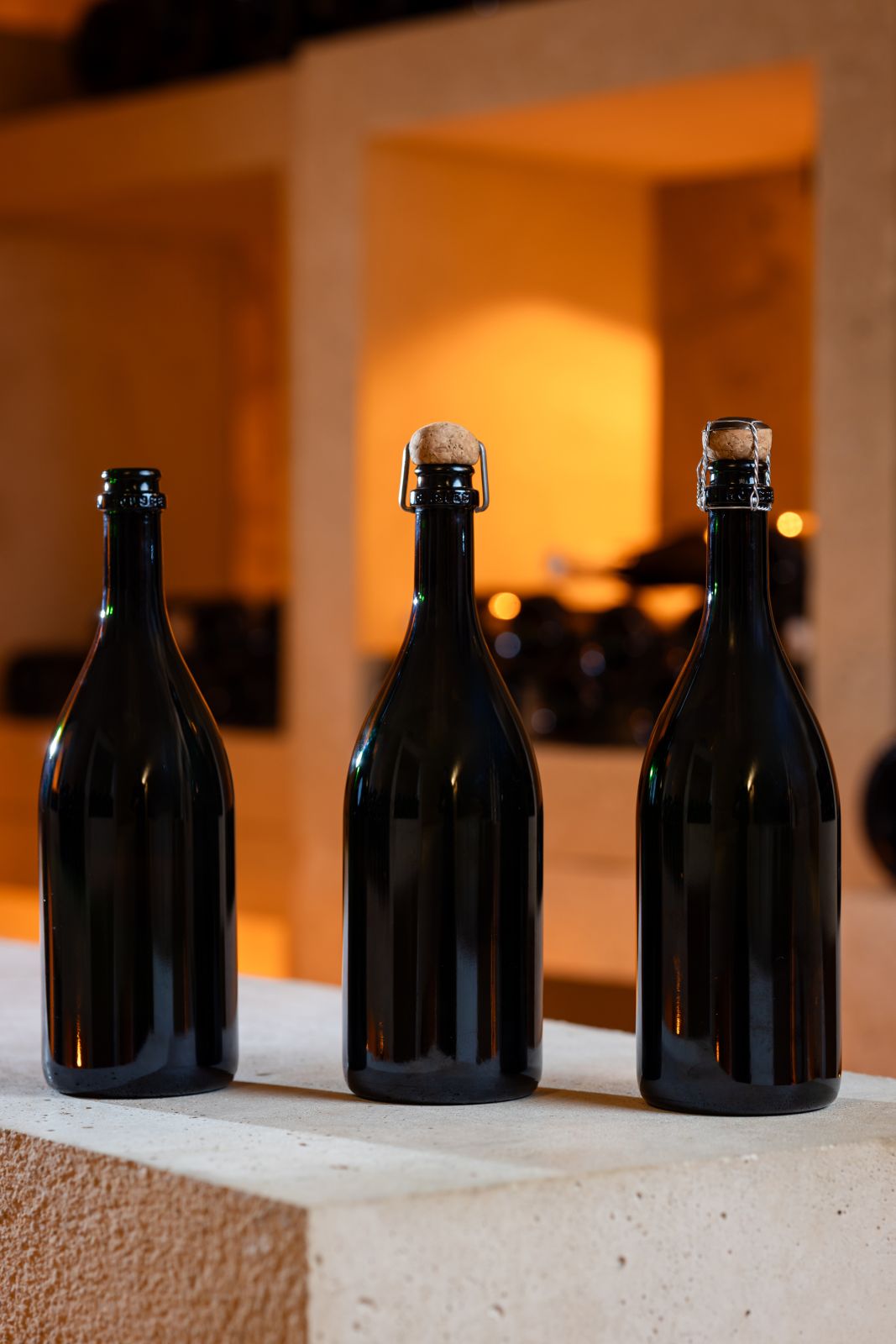
The Champenois have long been intrigued by this phenomenon, and a handful of producers have long wanted to engineer magnum's advantages into a standard bottle. Krug and Bruno Paillard were among the first to adopt narrow-necked bottles, reducing the diameter of the neck to slow oxygen exchange through the cork. Bollinger introduced its new bottle shape in 2012, explicitly describing the redesign as a "mini-magnum" in concept, very soon followed by Charles Heidsieck and many more.
These were meaningful innovations. But they were, in truth, incremental. The bottle still weighed 835 grams. The fundamental geometry of a standard Champagne bottle had not been deeply rethought.
The Light-26: Nature, Mathematics and a Grower from Cuisles
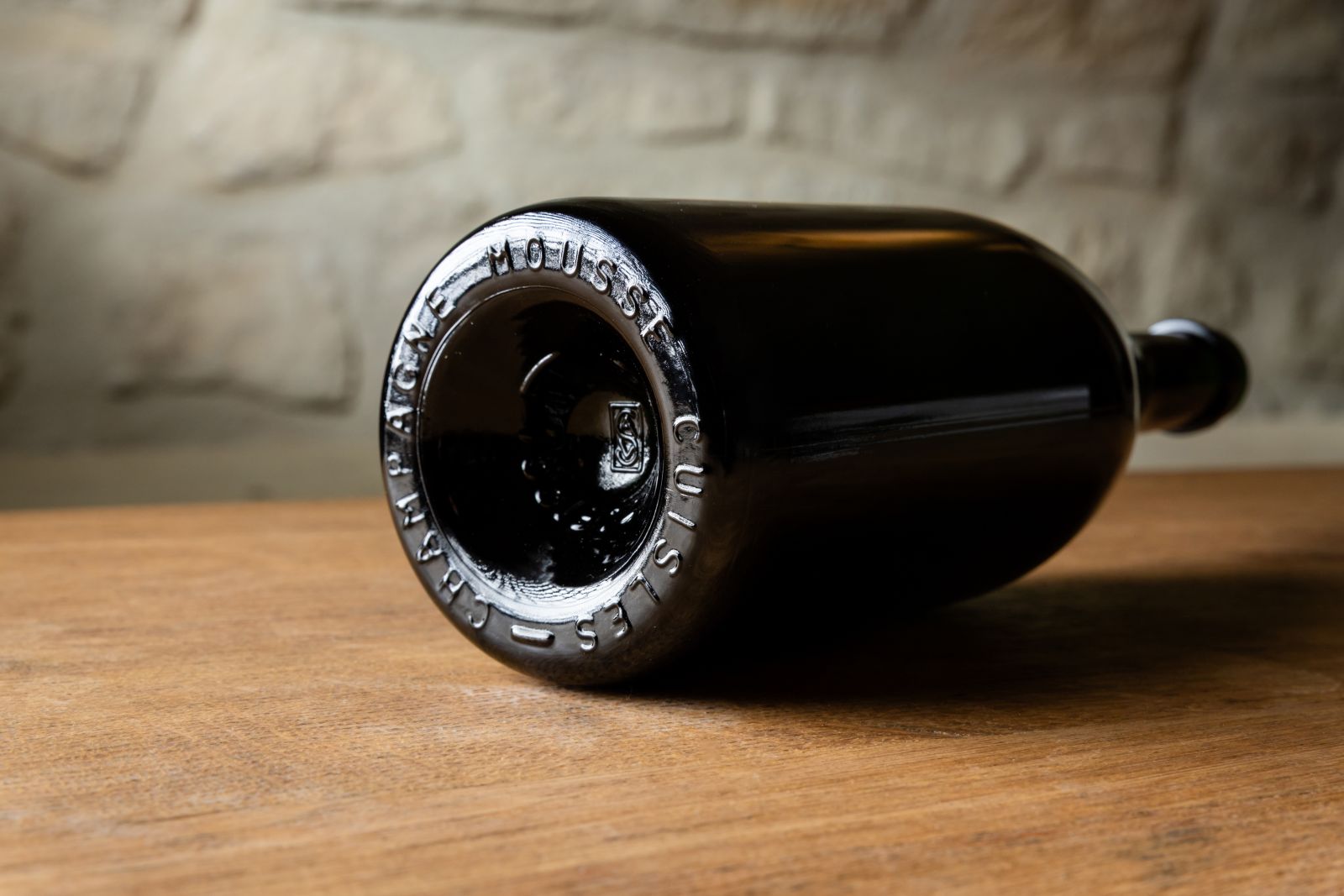
Perhaps the most unexpected source of the next leap forward is a small grower-producer from Cuisles: Cédric Moussé. Working in partnership with the French glassmaker Saverglass, Moussé has just developed a technically radical Champagne bottle.
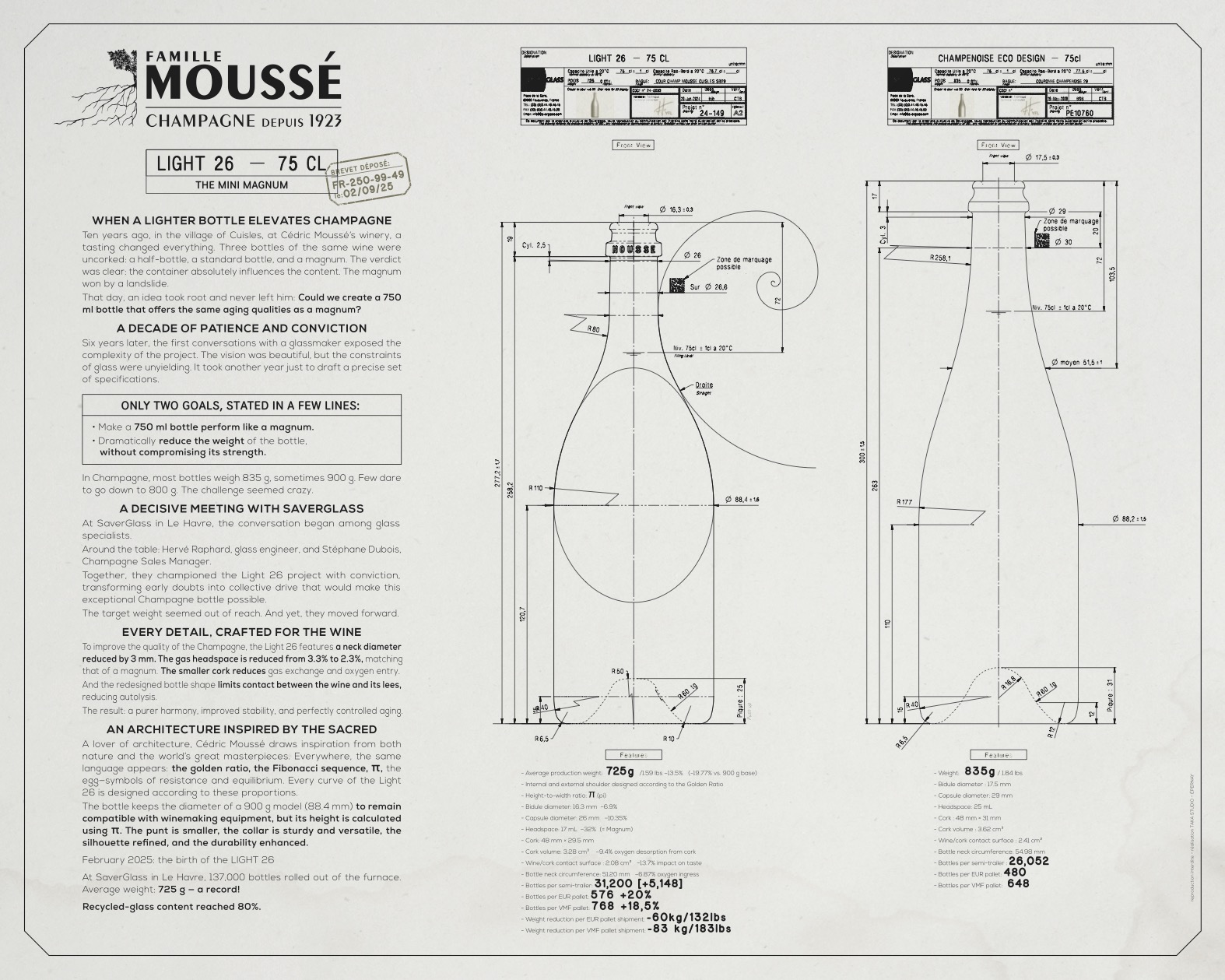
The Light-26 weighs just 725 grams, a record low for a Champagne bottle, and a full 110 grams below the current industry standard. But weight reduction, impressive as it is, is not the Light-26's most significant achievement. Tom Stevenson recently did the mathematics in his article for the World of Fine Wine, and the numbers are striking. A standard Champagne bottle sealed with a crown cap carries a net headspace (the volume of oxygen above the wine) of around 3.3%, while a magnum carries 2.2%. The Light-26, sealed with a crown cap, reaches almost the same level at 2.3%. Yet, seal it with cork and agrafe in the traditional manner, and a headspace of just 1.5% is achieved.
How has Moussé achieved this while simultaneously reducing glass thickness and maintaining the structural integrity required to withstand Champagne bottle’s internal pressure? The answer draws from principles from mathematics and nature. The shoulder takes the shape of an egg because the egg is nature's own solution to the problem of withstanding pressure from within. For the neck, Moussé turned to the Fibonacci sequence, the mathematical pattern underlying some of nature's most resilient and beautiful forms. The bottle's height and width are derived from pi. The punt is smaller, yet the base diameter is maintained at 88.4 mm, ensuring compatibility with existing winemaking equipment.
My own comparative tasting at Famille Moussé a few weeks ago confirmed what the theory predicts. The difference between wines from the old and new bottle was significant and immediate: fresher, purer fruitiness, and a more youthful, vibrant impression. The bottle works.
The Environmental Case
The implications extend well beyond wine quality. Packaging accounts for around 32% of Champagne's total carbon footprint, and the glass bottle is the single largest component. Glass production is inherently energy-intensive. Lighter bottles mean less glass to melt, less fuel to transport, thus lower emissions at every stage of the supply chain.
The Champagne industry has made measurable progress. The shift from 900 grams to 835 grams in 2011 delivered 8,000 fewer tonnes of CO₂ per year across the region. Telmont's 800 g bottle, developed in open-source partnership with Verallia and available to any producer who wishes to adopt it, delivers a further 4% reduction per bottle. The Light-26, at 725 grams, goes further still, bringing additional efficiencies in logistics according to Moussé: 20% more empty bottles per truck, 20% more full bottles per pallet, and reductions of between 5% and 22% in associated materials such as corks, capsules, foils, and boxes.
Holding a Patent, Sharing a Vision
Moussé holds a patent on the Light-26 until 2028 and is currently engaged in research with the Comité Champagne, with highly encouraging results. Meanwhile, Saverglass's next milestone is already underway: producing the bottle in a hybrid furnace powered by both gas and electricity, reducing the carbon footprint of manufacture further.

The story of Champagne's bottle is, in miniature, the story of the appellation's relationship with sustainability. From 1,250 grams at the turn of the last century, to 900 grams, to 835, to 800, to 725 — each reduction has required years of engineering and testing. The Light-26 represents the most ambitious step yet, and it comes not from a grand maison with an army of engineers, but from a small grower-poducer working with a mathematician's instincts and a craftsman's passion.
Essi Avellan MW is one of the leading authorities on Champagne and a contributor to WSG's Champagne Masters Program, sharing her expertise on Champagne, sparkling wine production and tasting. If you enjoyed this article, explore the program to deepen your understanding of Champagne's terroirs, producers, styles and winemaking innovations.