BLOG
Corpinnat, a Sparkling Shift in Catalunya
Miquel Hudin
Tasting and Trends
“DO Cava is much more than Corpinnat.” DO Cava president Javier Pagés, February 2019.
Throughout the early 2000s, the sparkling wines from Spain’s region of Catalunya had witnessed much dissent, but nothing had been so decisive as this fateful moment in 2019.
‘Cava’ was a name created with Spain’s joining of the EU in 1986. France didn’t take kindly to the sparkling wines having been called Xampany/Champaña in Catalan/Spanish and was enforcing its rightful claim that the word Champagne only be for sparkling wines from that region.
While there has long been an undercurrent of artisan, craft producers in the Cava regions akin to the Récoltant-Manipulant or ‘Grower’ Champagne producers, there has also been tremendous consolidation over the following decades to the point where three producers, Freixenet, Codorníu and García Carrión, now control at least 90% of the production.
For some time, smaller producers saw the continuing destruction of the brand ‘Cava’ as wines from the larger producers were priced lower and lower. Many made the decision that something needed to change and the first was Pepe Raventós of Raventós i Blanc, who left the DO Cava in 2012. Despite being part of the group that created the original DO Cava, Raventós stated their reasons for leaving were that, “...in 2010 the positioning of Cava in international markets was associated with low quality and low price.” Less forgiving critics such as wine personality Tom Gilbey have described the lower-tiered wines as “battery acid”.
Raventós wanted to form a new Denomination of Origin called Conca del Riu i Anoia based upon the two main rivers in the Penedès region. To date, it still hasn’t been registered as a Spanish DO and only has Raventós i Blanc producing wines within its boundaries.
Immediately following Raventós i Blanc’s departure was the formation of Clàssic Penedès under the auspices of DO Penedès in 2013 with stricter conditions, including that all grapes harvested to be 100% organic. Penedès had for decades been the quality, still wine counterpart to DO Cava as they essentially sit atop one another and some Cava producers saw it as a way to leave, but still be under a DO.
For a variety of reasons, core high-quality sparkling producers didn’t break with DO Cava for Clàssic Penedès but ultimately, in April of 2018, Corpinnat, meaning ‘from the heart of Penedès’ became known to the public during a press event in the heart of sparkling country, Sant Sadurní d’Anoia.
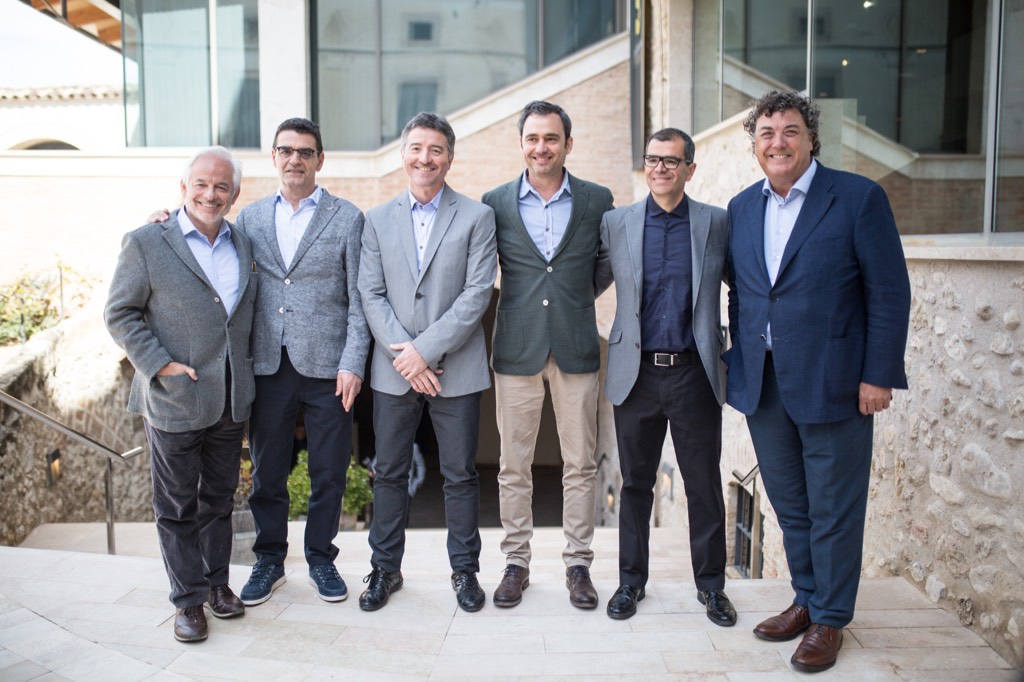
Xavi Gramona, Xavier Nadal, Marcel Sabaté, Pere Llopart, Ton Mata, Toni de la Rosa. Corpinnat
It had been a lengthy project to build which started in 2014. The Corpinnat founders of Recaredo and Gramona along with the original joiners of Nadal, Sabaté i Coca, Llopart and Torelló set out to create a far stricter set of sparkling wine production rules than had ever existed in the realm of DO Cava.
Several of the core tenets were as follows:
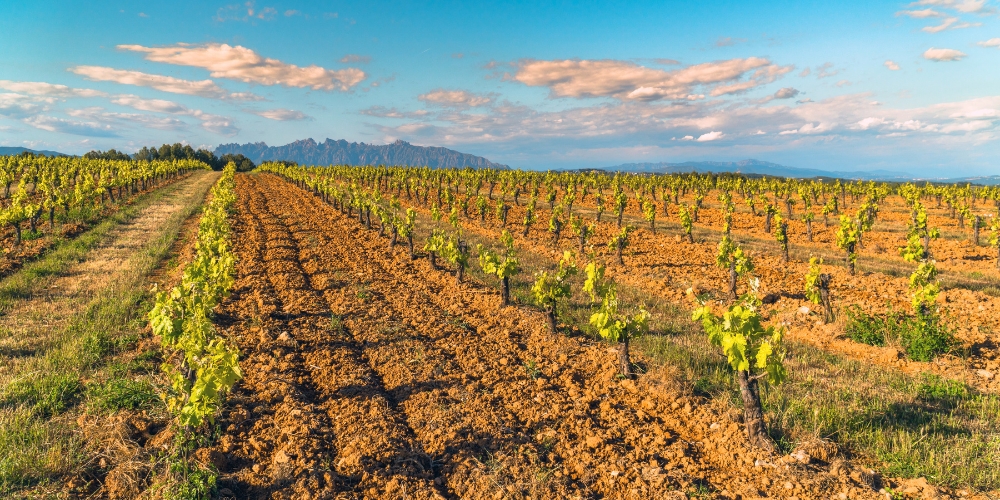
- A more tightly-defined area that’s 80% of the total territory of DO Penedès and only 60% of the total territory of DO Cava, which spreads across all of Spain.
- A focus on the local, traditional varieties and the elimination of those imported such as Chardonnay, Pinot Noir and others.
- All grapes must be, at a minimum, organically certified.
- While it’s allowed to buy in a percentage of grapes for production, minimum prices must be paid which at the time were more than double that of the large producers of DO Cava (0.64€/kg vs ~0.30€/kg) and continue to increase, having seen the base minimum rise nearly 50% since Corpinnat’s inception, currently sitting at 0.94€/kg.
- Minimum aging on the lees of 18 months.
Needless to say, DO Cava did not take kindly to this proposition and saw it as too independent and competition to the Cava brand, going as far as to say that it was forbidden for any winery producing Cava to state ‘Corpinnat’ on the labels.
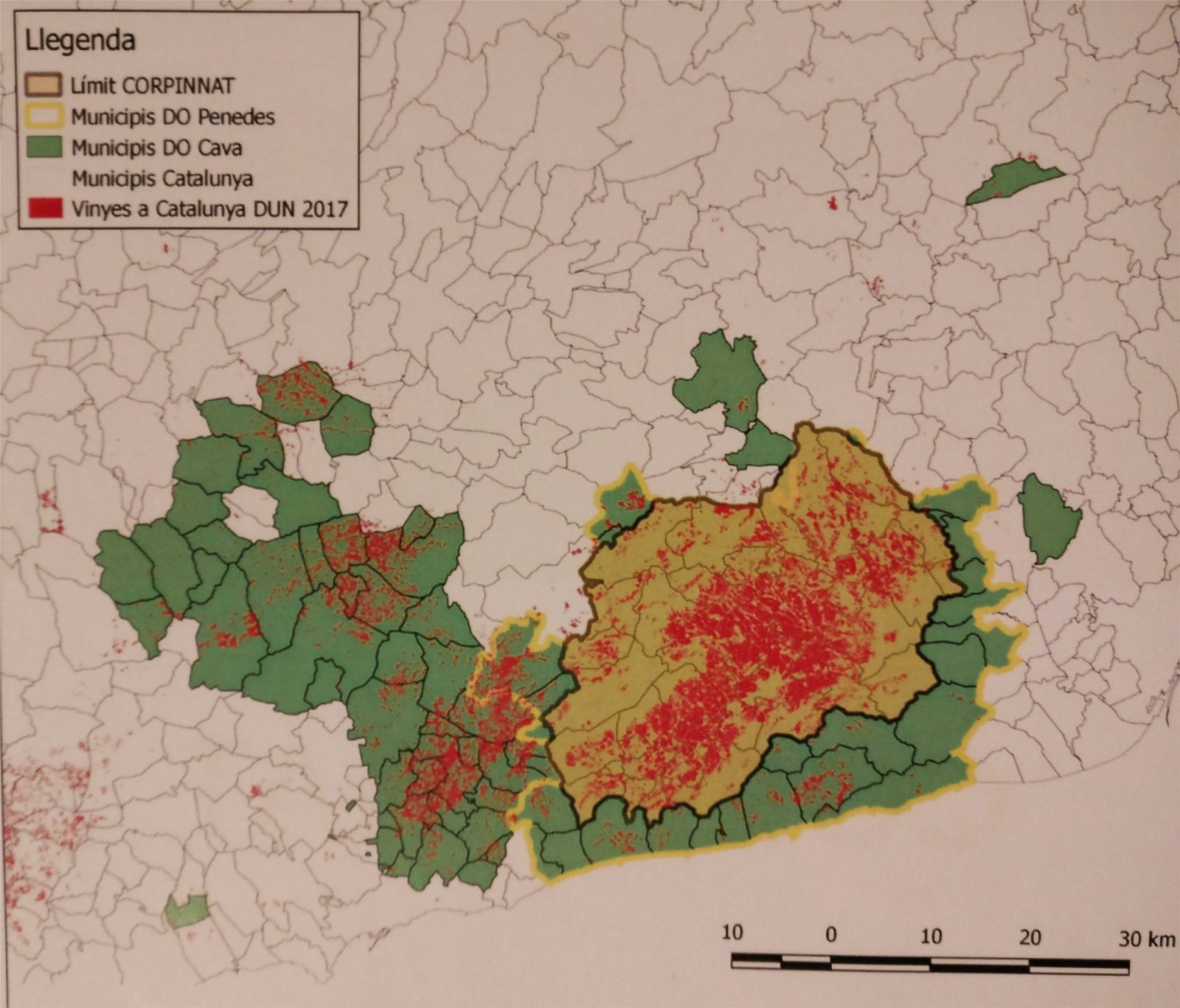
Production map. Miquel Hudin
Finding themselves at an impasse, in January of 2019, all six wineries left the auspices of DO Cava which in turn triggered the statement by then-president, Javier Pagès.
The first year was, suffice to say, confusing. People, especially in the wine trade, didn’t know what to make of yet another sparkling wine body from the Penedès region of Spain and there was some distaste for the name amongst Anglophones despite the fact that Champagne is pronounced ‘sham pain’. Regardless, they managed to add four more members over the next year.
Then the pandemic arrived, and with the closure of all hospitality venues, potential additions slowed down massively as wineries didn’t want to contend with rebranding to (what was then) an unknown sparkling wine group while also contending with the collapse of their sales channels.
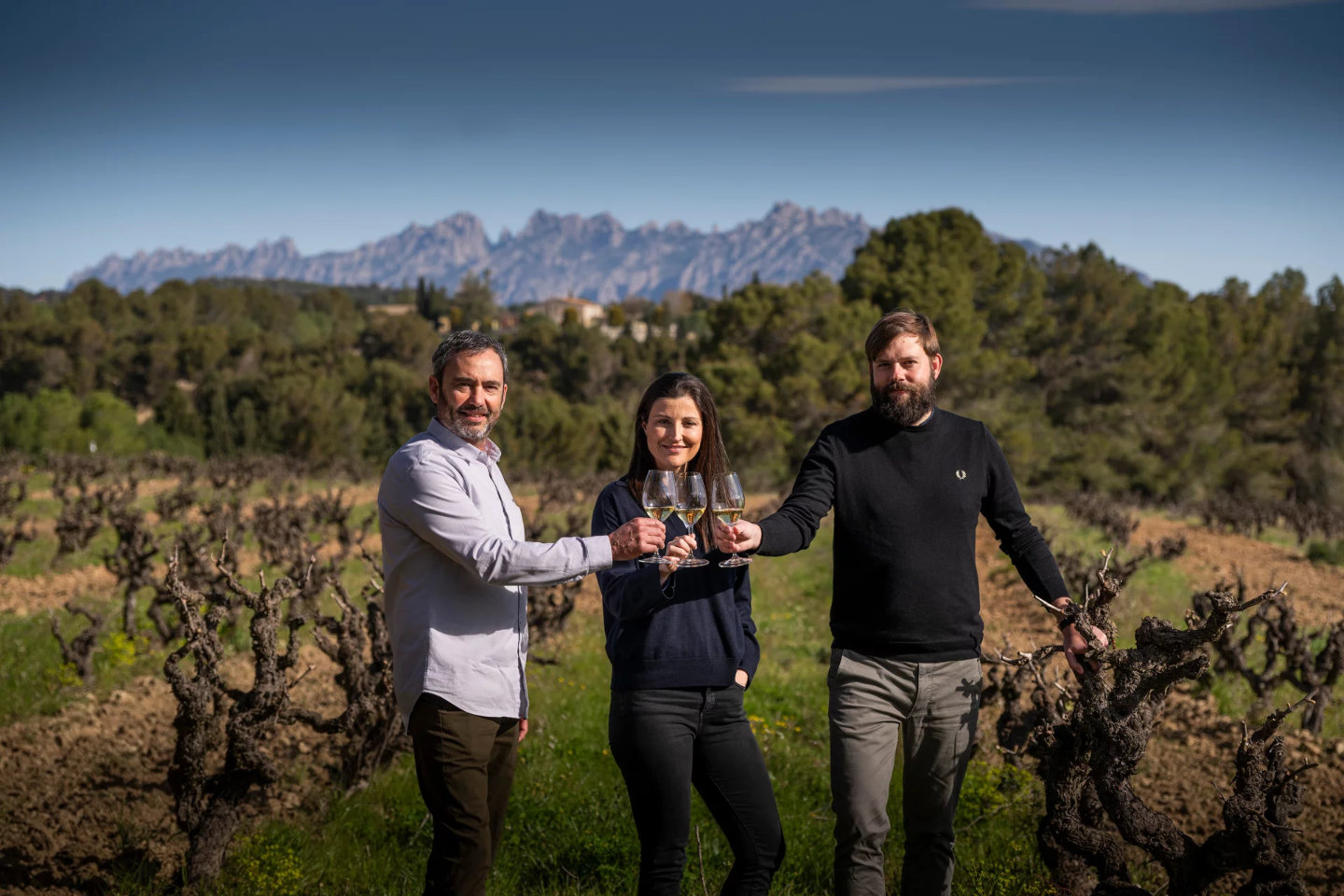
Pere Llopart, Mertixell Juvé, Roc Gramona. Corpinnat
The biggest news for the Corpinnat association came in early 2026 when Juvé & Camps announced that they would be leaving DO Cava to join Corpinnat as well. With an annual production of around 2.5 million bottles, the addition of Juvé & Camps nearly doubled the overall production of Corpinnat wines.
Currently the total number of wineries under the auspices of Corpinnat sits at 23. According to the association vice-president Roc Gramona, “Over the next year, we’ll see this rise to 25 or even 30 wineries in total depending upon how the auditing process goes.”
The big question now lies in terms of the future and where to go from here. Again, Roc Gramona, “We’re in a point of reflection in terms of what’s happening in the Penedès region. What we really want is to have a DO, myself included. We need to continue with direct representation though and enforcing the grape prices.”
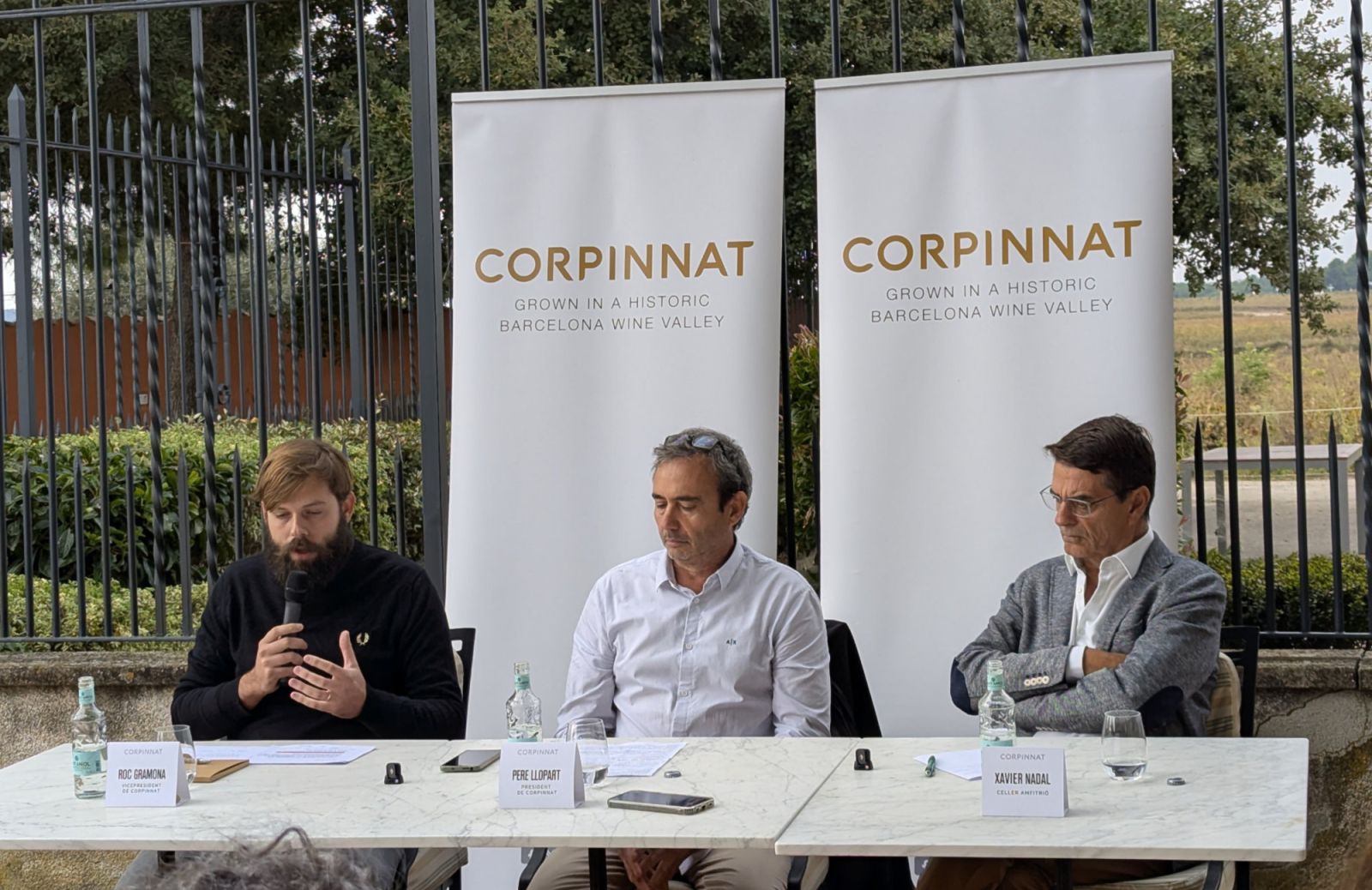
Roc Gramona, Pere Llopart, Xavier Nadal. Corpinnat
This has been the biggest change in discourse around Corpinnat over the last year, the idea now is how to grow further as their association doesn’t have the same weight as a DO. Additionally, everyone in the Penedès region is very aware that having DO Cava, DO Penedès Clàssic, Corpinnat, Conca del Riu Anoia and then those who are independent, is very confusing to the consumer.
Even Pepe Raventós, who didn’t want to join Corpinnat initially, despite adhering to all the tenets, is in agreement with the concept for the greater good, “Of course. The only way to position our sparkling wines in the space they deserve is to do it together. The world is waiting for a well-made alternative to Champagne, not that what we have is a better terroir, but it’s that we’ve worked better and much more united than previously.”
Whatever the case and the format it takes, the market has clearly spoken in support of Corpinnat and in addition to their producing some of the best sparkling wines in the world, they’ve proven to be a case wherein producing quality and sustainable wines is the path of the future.