
BLOG
wine tasting
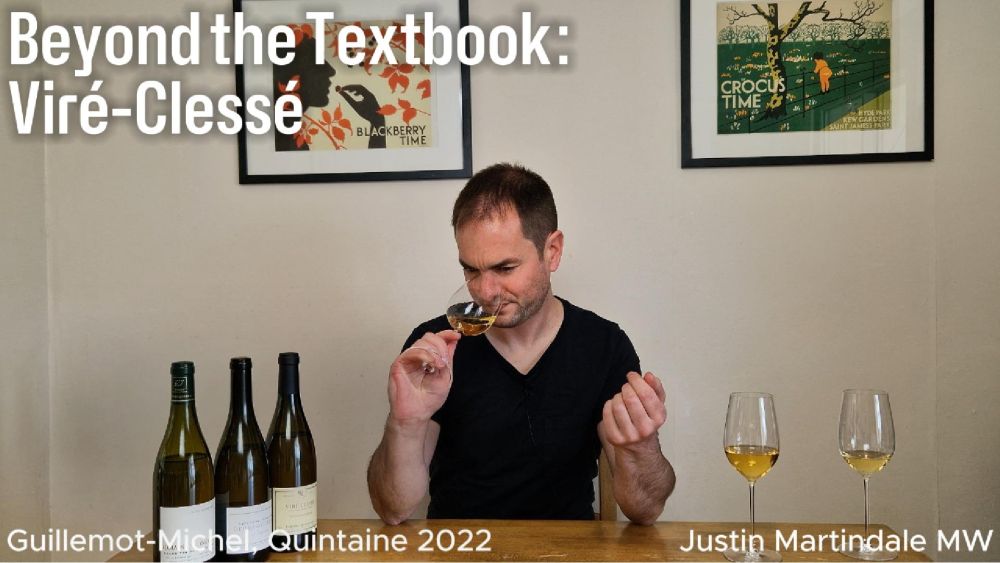
Summary:
The 'Beyond the Textbook' series seeks to get under the skin of specific varieties and regions from around the world. Here Justin tastes 3 amazing, but very different style from Viré-Clessé. It's Chardonnay, but not as you know it...
Details of all three wines can be found in the attached pdf
About the Speaker:
Justin Martindale is the Wine Scholar Guild Membership Manager and one of our in-house Masters of Wine. Justin passed the
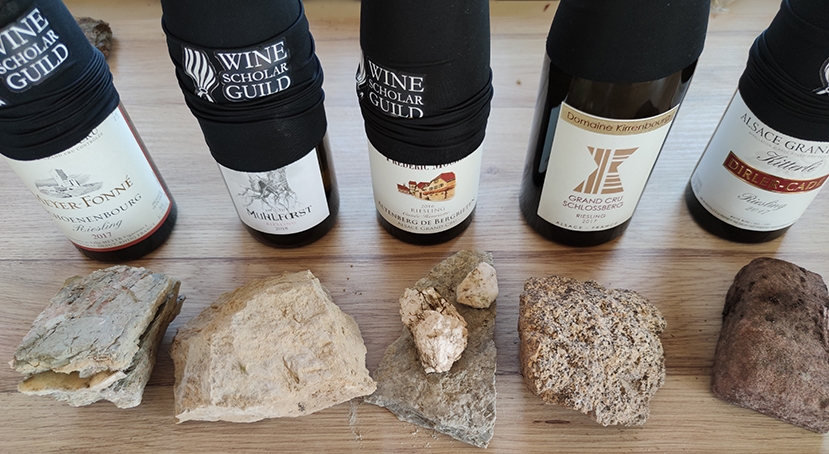
Is a wine horizontal or vertical? Square or round? Hollow or dense? Relaxed or tensed? Grainy or smooth? This is a small sample of GeoSensorial Tasting vocabulary — a method that seeks to empower the taster to feel, interpret and give voice to wines of place.
By focusing on mouthfeel and assessment criteria such as energy, salivation, geometry, texture and consistency, this methodology helps you to better understand the nuances that a specific terroir, among other factors, brings to wine and helps you to express those nuances. It puts light on how, for example, Chenin Blanc wines from the schist soils of Savennières, the tuffeau of Saumur and the flint-clay and limestone-clay of Vouvray differ from one another. Quite an ambitious undertaking!

Chris Martin MW joins the Wine Scholar Guild as our new Director of Education. Simon J Woolf spoke to him about his background and what he’ll be bringing to the role.
There’s an assumption in the wine world that if you’re knowledgeable in your subject area, ergo you can teach. Chris Martin MW wants to challenge that idea. Unusually for the sector, he started out in the world of education and latterly cross-trained in wine.
Wine education has historically been built around a sensible goal: creating structure in a complex world. For decades, education has helped professionals and enthusiasts navigate regions, grapes, appellations, tasting frameworks and technical language — all in a wine industry that has become increasingly globalised and commercially sophisticated.
If there’s one thing in the world I love, it’s judging. From driving, to elite sport, to other people’s parenting, if you’re looking for someone to cast ill-informed opinions out into the wind, I’m your man. So, when the opportunity arose to contribute to what is probably the world’s greatest wine judging competition, I signed myself up quicker than you can say ‘baby-lead weaning’. Thankfully this is one area where I’m at least a little more qualified to apply
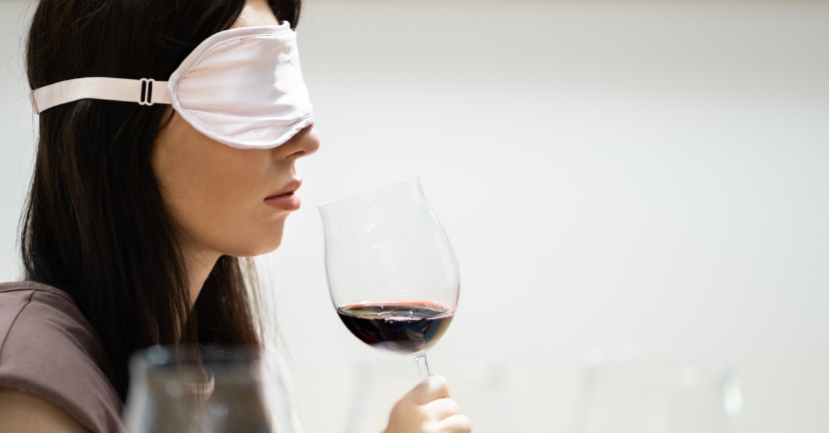
This article is the first of an upcoming series by French neuroscientist Gabriel Lepousez. Gabriel is part of the Scientific Committee formed by WSG in the context of its "Architecture of Taste Research Project". He has also presented a fascinating segment on "The Neuroscience of Wine Tasting" as part of The Science of Wine Tasting Webinar Series which will resume with new episodes in the Spring of 2022.
The wine tasting paradox
There is a real paradox in the experience of tasting a product like wine. Tasting is such a familiar, instinctive, and seemingly obvious act; something that we take for granted. At the same time, wine is a one of the most complex sensory objects that we put into our mouths.
Indeed, wine is one of the rare sensory objects of our daily life which solicits all at the same time:

As part of a partnership between Wine Scholar Guild and Decanter, we are pleased to share with our readers this article pulled from Decanter Premium. Try Decanter Premium for 4 weeks for just $1! More information HERE
Robert Parker says a 100-point wine should be ‘as exceptional as a particular wine can be: a perfect blend of power, richness, texture, depth, length, balance, freshness, and of course a reflection of its vintage and terroir or origin’.
Here are Parker’s most memorable 100-point wines.
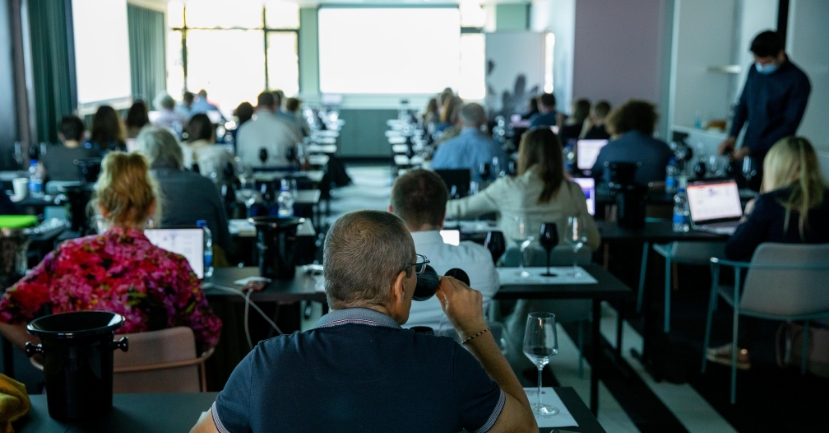
On the 6th of September 2021, Wine Scholar Guild hosted the first large-scale blind-tasting panel as part of its recently announced The Architecture of Taste Research Project.
Hosted at the Bristol Hotel in Colmar, Alsace, this panel tasting launched WSG’s research on the tactile and geosensorial tasting approach it developed over the past year.
The tasting was designed specifically to assess the experimental and innovative tasting grid that had been developed as part of the Architecture of Taste Research Project. Its eventual aim is a tactile and geosensorial tasting method which focuses on a wine’s energy, induced salivation, geometry/shape, texture, and consistency.
Such a tasting method would provide students of wine with an enriched and universal lexicon that not only assesses the qualities of a wine but also dives into the nature of a wine’s personality and, perhaps, its corresponding terroir signature.
The panel of tasters included owners or representatives of twenty top Alsace estates such as Albert Boxler, Weinbach, Marcel Deiss and Albert Mann. They were joined by a dozen wine professionals, including Pascaline Lepeltier MOF, a member of the ATRP Scientific Committee, as well as a dozen serious wine lovers. All in all, over 45 panelists participated in the tasting.
Few, if any, moments in wine are more dramatic than when a producer decides it is time to pick fruit. Whether they rely upon a Brix reading, a visual cue from the grape seeds, or the finely tuned instrument of their own palate, making the call to harvest a plot of grapes is a decision fraught with consequence. Get it exactly right and you can have a legendary vintage. Get it wrong, and nothing that follows from the vine to the winery to the bottle can make up for an ill-timed harvest.
“Ripeness is balance at its apogee,” notes Julia Harding, a Master of Wine, wine critic, contributor to JancisRobinson.com, and the co-author of the often-referenced book Wine Grapes. Yet given the frequency with which “ripeness” and “balance” are used as terms in wine discussion, it is worth our time to take a step back and try to find a consensus on what they actually are (or even, if they are the same thing), and the ramifications this may hold for our sensory perception.
As we discovered, defining where that apogee of balance lies can be exceedingly difficult. Balance “resists codification,” says wine journalist and critic Andrew Jefford. “It varies culturally; it varies by individual; it varies by region and by variety.”
For our latest Great Debate, Andrew Jefford and Julia Harding tackle the finer points of ripeness and balance in wine. Their back-and-forth covers a lot of ground: how to decipher balance on the palate, the differences between tasting wine and drinking a wine, putting the value of alcohol levels into context, the role climate change is playing in defining our sense of taste, and even the dangers of allowing one’s intellect to override the sensual response. All of it, Jefford suggests, is in a quest for, what he calls, “resonance.”
While we may not have arrived at any convenient new truisms, in the end, wine’s remarkable ability to reveal the harmony of nature is — at least for now — something we can all agree on.
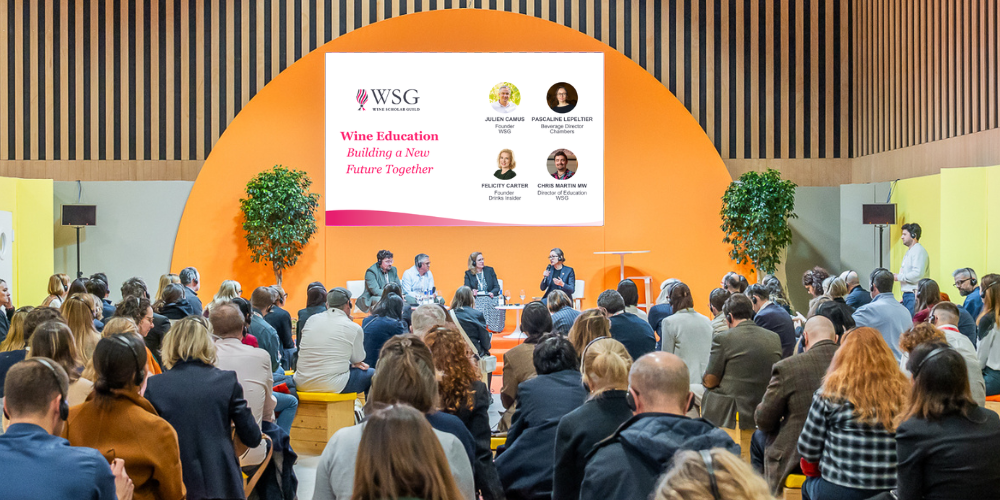
This article explores themes connected to the panel discussion led by WSG at Wine Paris on February 9, 2026.
Wine is one of the most culturally rich, emotionally resonant traditions in the world. It connects people and place like few earthly things can. Yet the wine industry finds itself on the edge of a precipice. Declining consumption, shifting demographics, climate chaos and fierce competition from spirits and non-alcoholic alternatives all call wine's future into question. External forces aren't the only culprits. Within the industry, wine education itself has unwittingly become part of the problem—actively contributing to the disconnect between wine and the people who might love it.

The WSG Tasting Diploma is a bold, multidisciplinary program designed to break free from the technical and soulless tasting methods that are most commonly taught. It's a complete reimagining of how to taste wine.
This revolutionary course will allow students to take their critical tasting skills to the next level and gain deeper understanding of expression of place and terroir in wine. The course delves deeply into neuroscience and a qualitative approach to wine tasting, with an emphasis on texture and mouthfeel. We consider many elements that are neglected in traditional tasting methodologies, such as energy, vitality, salivation and digestibility. In this article, Simon J. Woolf asks what makes the difference between mass produced commodity wine and artisanal wine that reflects its origins.
Twenty years ago, Wine Scholar Guild began with a clear mission: to deepen the world’s understanding of France’s wines through education. It was 2005, and I was 23 years old, working as a trade attaché at the French Embassy in Washington, DC. This was a time of anti-French sentiment in the US, and French wine—something I knew to be an expression of place, people and culture—was caught in the crossfire.

This wine has high acidity, medium alcohol with medium body, and aromas of lemon, lime, and wet stones. Sound familiar? Wine tasting notes can appear strikingly similar on paper, especially when tasting a suite of comparable wines. But, as a taster, how can you differentiate them? Do we learn anything about their terroirs or production methods from this tasting note?
WSG's Tasting Lab® allows you to take your