BLOG

Alpine Italy: Height of Excellence

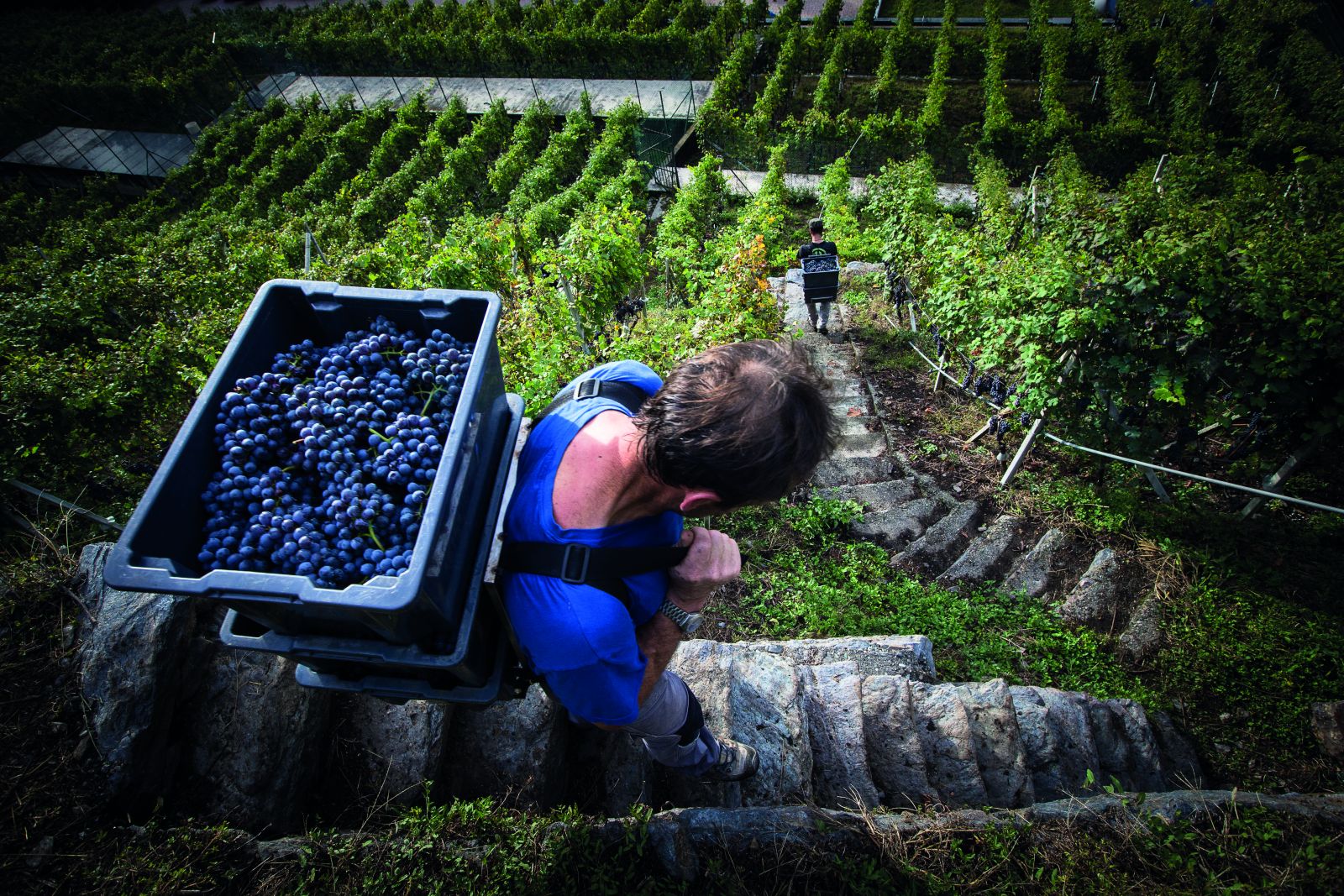
Harvesting at ARPEPE.
Harvesting at ARPEPE. Beniamino Pisati

Matt Walls investigates the influence of altitude on the wines of the Italian Alps.

Fresh, mineral whites and chiseled, low-alcohol reds; increasingly popular styles that spring naturally from the mountainous vineyards of northern Italy. The profiles of these wines are strongly influenced by the elevation at which the grapes are grown. But how exactly does elevation influence vines? What’s the effect on the wine in the glass? And is planting ever higher an effective response to climate change? Some top winemakers from Trentino, Lombardia and Alto Adige give us the low-down on the up-high.

Higher is cooler 

Anyone who’s climbed a mountain will know that the higher you go, the cooler it gets. Danilo Drocco, the winemaker at Nino Negri in Valtellina, Lombardia, offers more precision: “There is a thermal rule that, at our latitudes, predicts a temperature drop of 0.65 °C for every 100 m of altitude increase. For example, if the temperature is 20 °C at 100 m, it will be only 17.5 °C at 500 m and only 14 °C at 1,000 m.”

A cooler climate will influence a vine’s growing cycle. It will bud later and enjoy a long, slow growing season. “Delayed ripening means grapes with different aromatic and chemical characteristics,” says Drocco. Grapes grown in marginal climates often produce more complex aromas.

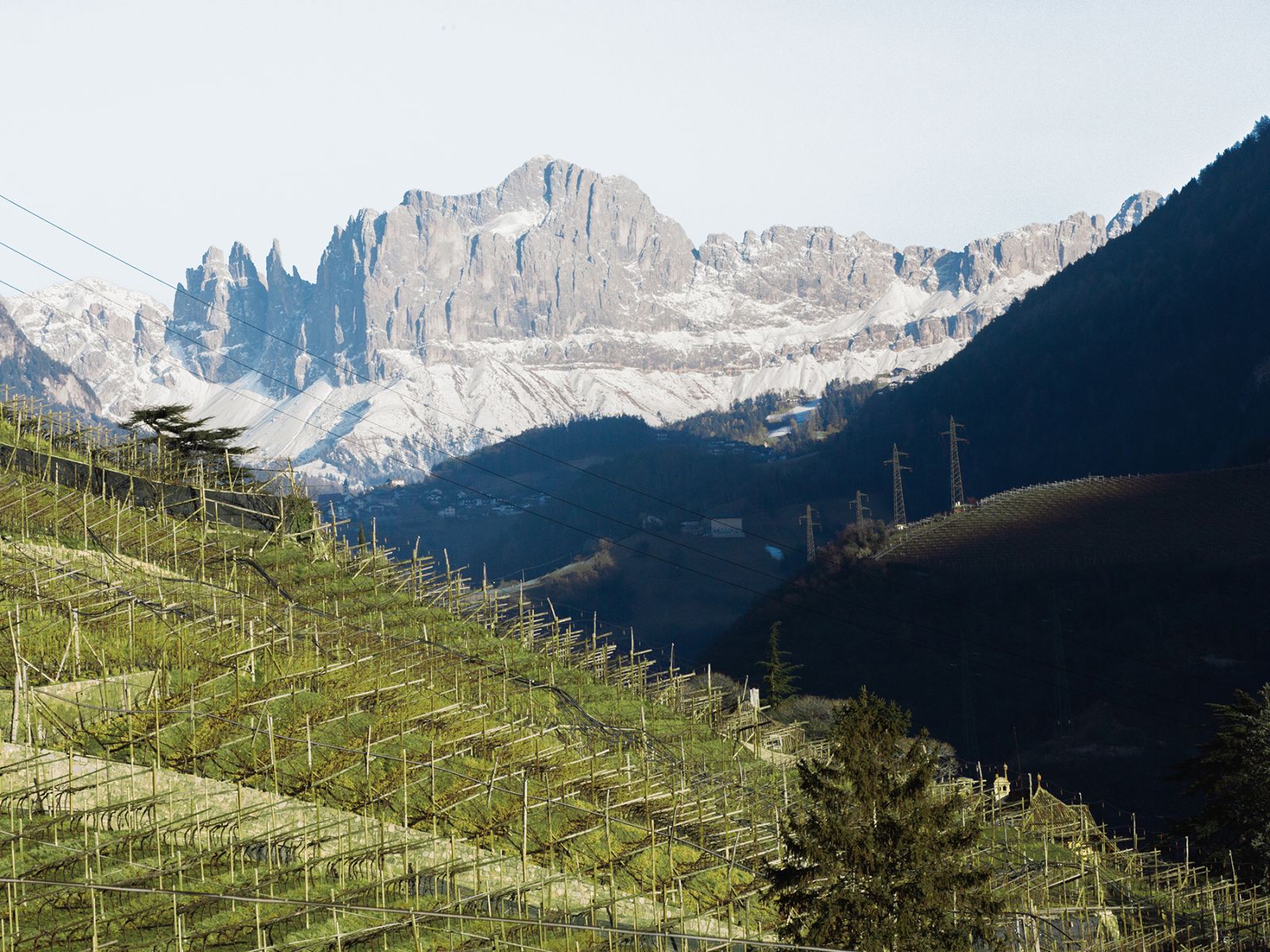
Dolomites, Alto Adige. Alois Lageder

Alois Clemens Lageder is the managing director of Alois Lageder in Magrè, Alto Adige and he adds that it’s not just average temperatures that are affected. “Altitude significantly impacts the variations between day and night, which are more pronounced in higher areas.” A high diurnal temperature range can help preserve freshness and acidity.

Slope and exposure

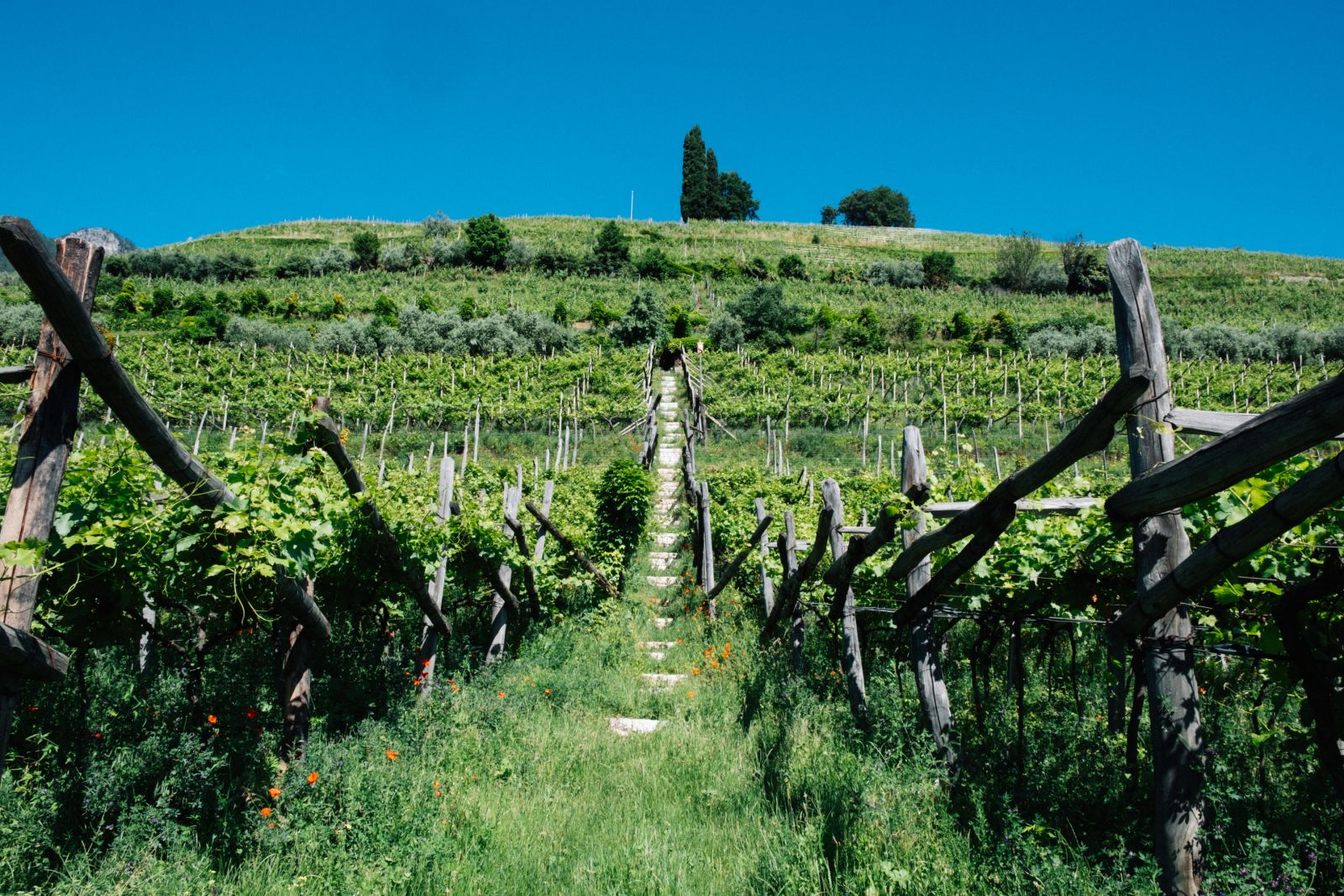
Mountain viticulture isn’t just about higher elevation; however, a connected factor is gradient. Matteo Moser at Cantina Moser in Trento, Trentino, says, “whether a vineyard is located at 300 m or at 700 m, it is still a vineyard on a slope, where it is difficult, if not impossible, to mechanize agronomic operations and many of them must be carried out manually.” It makes farming much more expensive. “We are not talking about 50-100 hours of work per hectare as in the plains, but rather about 600-800 hours per hectare.”

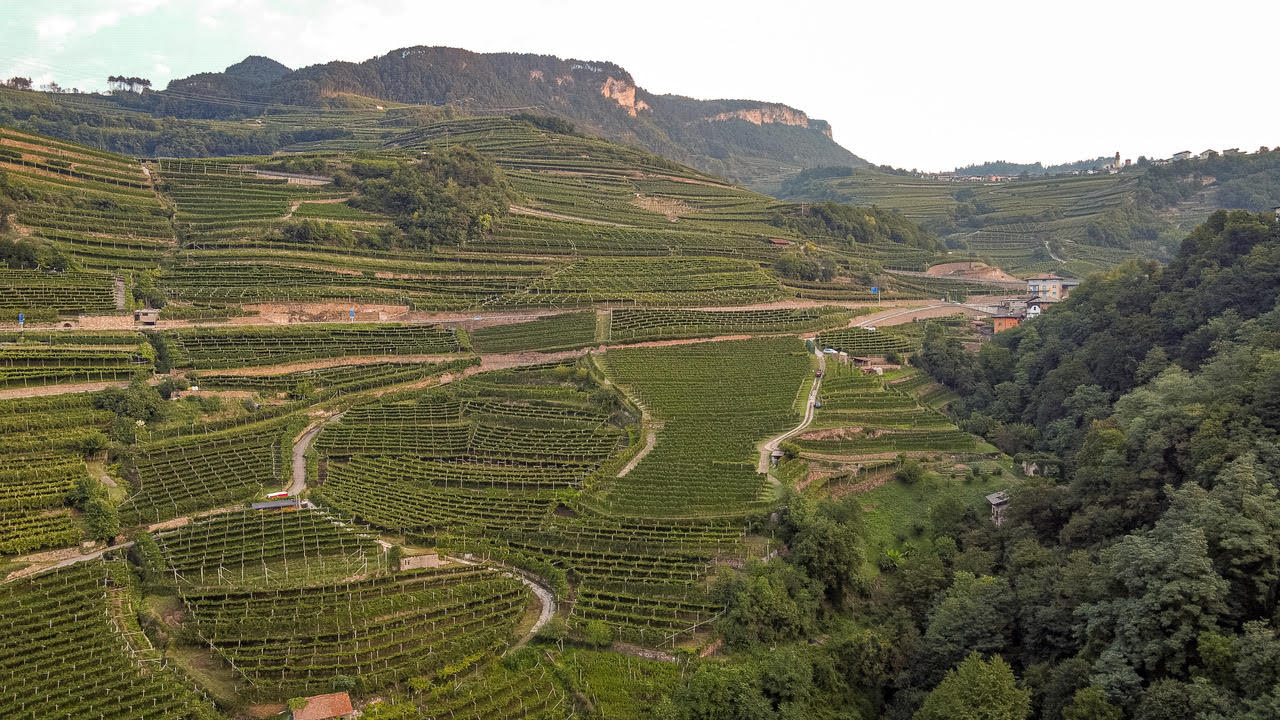
Valle di Cembra, Trentino. Moser Trento

“In addition to slope,” Moser continues, “…in the mountains, there are numerous different exposures. Having two vineyards both at 500 m above sea level, where one faces south and the other faces north, will produce significantly different final results.” At Cantina Moser, “our decisions are guided primarily by sun exposure of our vineyards rather than altitude,” he says.

Sites and varieties

Not all varieties are equally suited to high elevations. Lageder says, “Certain varieties are much better suited to specific altitudes than others.” Pinot Grigio and Gewürztraminer, for example, are particularly sensitive to heat, making it necessary to find cooler locations for them.

“Conversely, some indigenous varieties like the Blatterle actually benefit from the warmer climate,” he continues. “Chardonnay adapts quite well to a changing climate. Decisions about planting at extreme elevations, such as 900 m, require very careful consideration of the specific variety's needs.”

Winemaking in the clouds

The main effects of working at high elevation are felt by the vine, but it can impact winemaking too. Danilo Drocco at Nino Negri says “each grape variety must be vinified using different methods than those used at lower altitudes. For example, the vinification of Nebbiolo grown at high altitude must be optimized to extract only the sweet tannins, as higher acidity could enhance the astringency.”

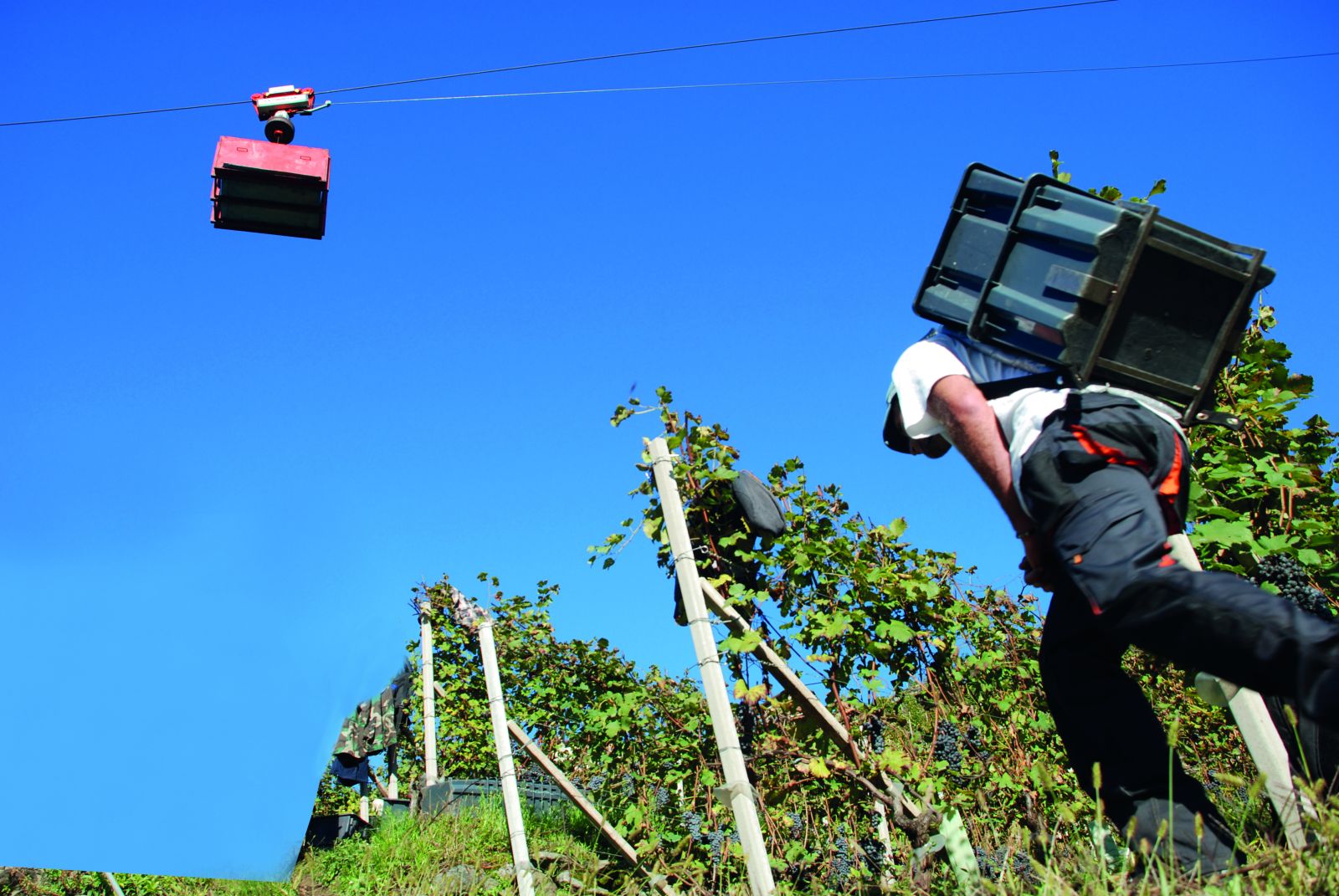
Harvest by cableway. ARPEPE

Mountains provide possibilities for experimention. The ‘Nino Negri 3000’ project began in 2016; every year, they transport 3,000 magnums of two different Nebbiolos to cellars situated at 3,000 m/9,843 ft above sea level. The lower atmospheric pressure results in less oxygen exchange through the cork, which they believe helps to preserve greater aromatic freshness. The wines also remain youthful for longer as the lower temperatures slow the wine’s development in bottle. The first vintage will be released later this year.

Hedge against climate change

The freshness of altitude is increasingly attractive in a heating climate. “In Alto Adige,” says Lageder, “the average annual temperature has increased by around 3°C in recent decades, so planting at higher elevations can help balance this warming.” But he adds that “planting at higher altitudes can be part of the answer, but not a solution in itself.”

Lageder says that in Alto Adige, the planting limit is 1,200 m/3,937 ft above sea level, but even at 800-900 m/2,625-2,953 ft it can be difficult to find sites that will reliably ripen grapes. “Beyond a certain point, the development cycle might become too slow to achieve the necessary grape quality,” he says.

Römigberg vineyard, Lake Caldaro. Alois Lageder

But not all regions have the option to plant higher up. Isabella Pelizzatti Perego of ARPEPE in Valtellina says the maximum elevation of plantings is 750 m/2,461 ft, but if you go higher into the forests above the vineyards, you can see abandoned terraces once used to grow grapes many years ago. Despite this, she says that securing permission to clear these forests to plant vineyards again is very difficult, not to mention the arduous work itself of uprooting trees. It’s a shame, as her highest vineyards tend to produce her best wines.

Moser in Trentino says that it’s “true to say that over the last 30 years viticulture has moved to higher altitudes,” but it’s important to remember that altitude is just one variable and it can’t be treated in isolation. But it’s undoubtedly a strong factor in giving the wines of Alpine Italy their fresh character that so many find so appealing.

Italian Wine Scholar 


Matt Walls

Matt Walls is an award-winning freelance wine writer, author and consultant who contributes to various UK and international publications such as Club Oenologique and Decanter, where he is a contributing editor. He also judges wine and food competitions, develops wine apps and presents trade and consumer tastings. Matt is interested in all areas of wine, but specialises in the Rhône Valley – he is Regional Chair for the Rhône at the Decanter World Wine Awards.

Alongside his blog contributions, Matt brings his knowledge to the vineyard as a brilliant guide for WSG’s Educational Wine Tours.
Related Articles