BLOG

Everything you need to know about Southern Rhône Grenache

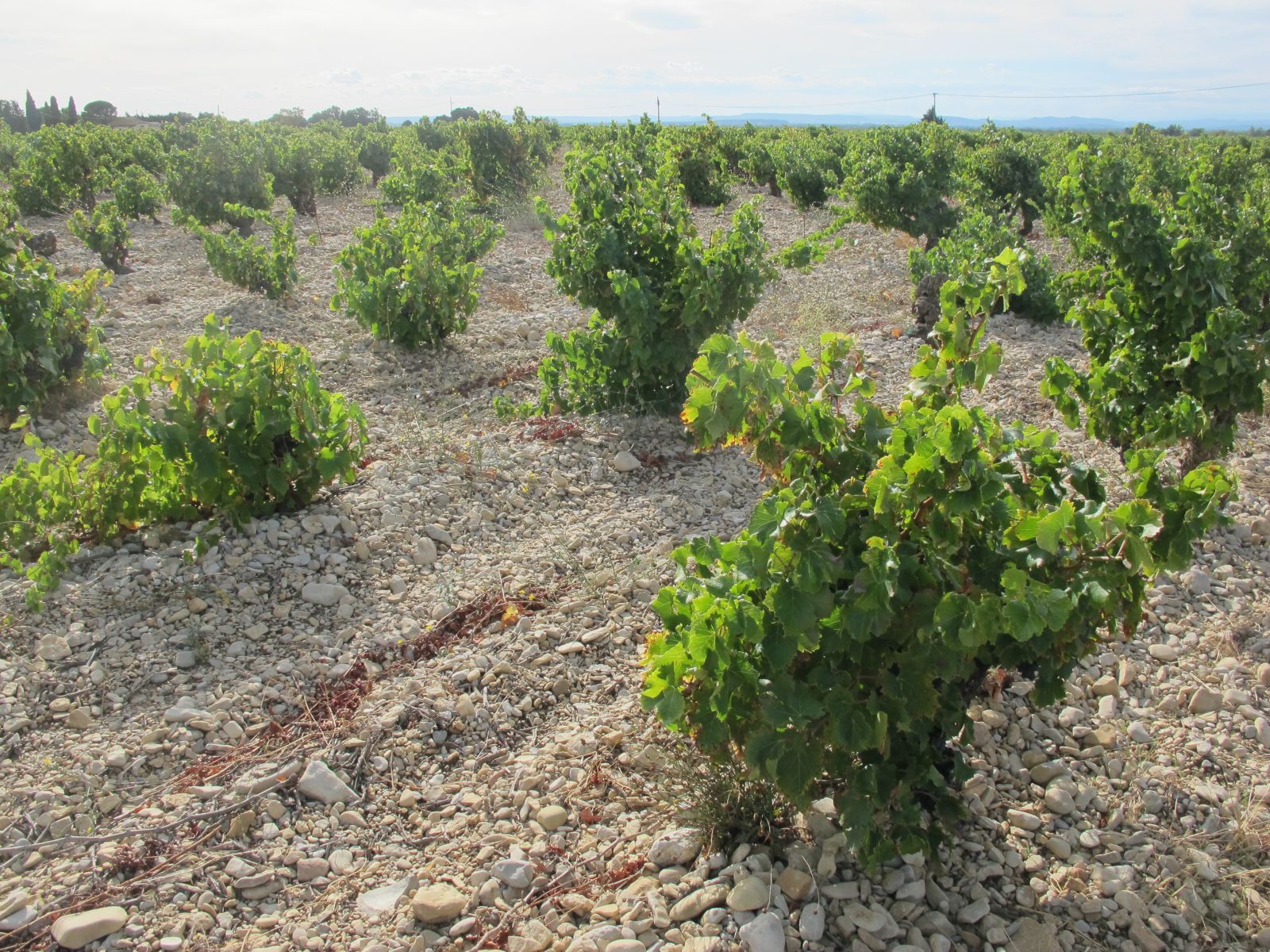
Bush vines in Vacqueyras.
Bush vines in Vacqueyras, Matt Walls

To understand the Southern Rhône, get to grips with Grenache, says Matt Walls.

Southern Rhône winemakers are spoilt for choice when it comes to grape varieties; there are dozens grown around the region. But the cornerstone is Grenache in all its forms. It may be ubiquitous but getting to know Grenache can take time, as it’s usually blended with more assertive grapes that can obscure its more subtle characteristics.

At its best, Grenache can offer a winning combination of generosity and finesse, an impressive ability to reflect terroir and an inclination to take on multifaceted flavors as it ages. No wonder it’s the Rhône’s most widely planted variety. To understand the region, grasping this grape is a good place to start.

Spanish roots

Like the Pinot family, Grenache comes in three colors: Grenache Noir (usually referred to simply as Grenache), Grenache Gris and Grenache Blanc. There’s a fourth member of the family called Lledoner Pelut, known as ‘hairy Grenache’ due to its downy leaves, but this hirsute Catalan cousin isn’t found in the Rhône.

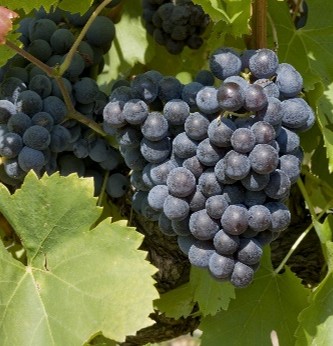
Southern Rhône Grenache. Credit: Inter Rhône
Southern Rhône Grenache, Inter Rhône

Considering the amount of Grenache grown here, you’d be forgiven for assuming that it originates from France. But it actually comes from Spain, where it’s known as Garnacha. According to Jancis Robinson et al. in Wine Grapes (2012), it probably comes from Aragon in northeast Spain. Another hypothesis is that it hails from Sardinia, where it has been grown for hundreds of years under the synonym Cannonau, but this is less likely.

From its homeland, it ventured into the Roussillon in the late 18th century, where it’s still widely grown today. Then it made its way east through the Languedoc to the Rhône.

Grenache in the Rhône

There is now more Grenache in France than in Spain and more in the Rhône than in any other region.

In 2024, Grenache Noir accounted for 34,831 ha/86,069 ac of the total 63,307 ha/156,435 ac of Rhône Valley AOC vineyards, so 55% of all plantings. Grenache Blanc is the most planted white grape, with 2,086 ha/5,155 ac in the ground; this amounts to just 3% of total plantings but around 20% of all white and pink varieties. Grenache Gris is much rarer, with just 34 ha/84 ac under vine (all figures from Inter Rhône).  

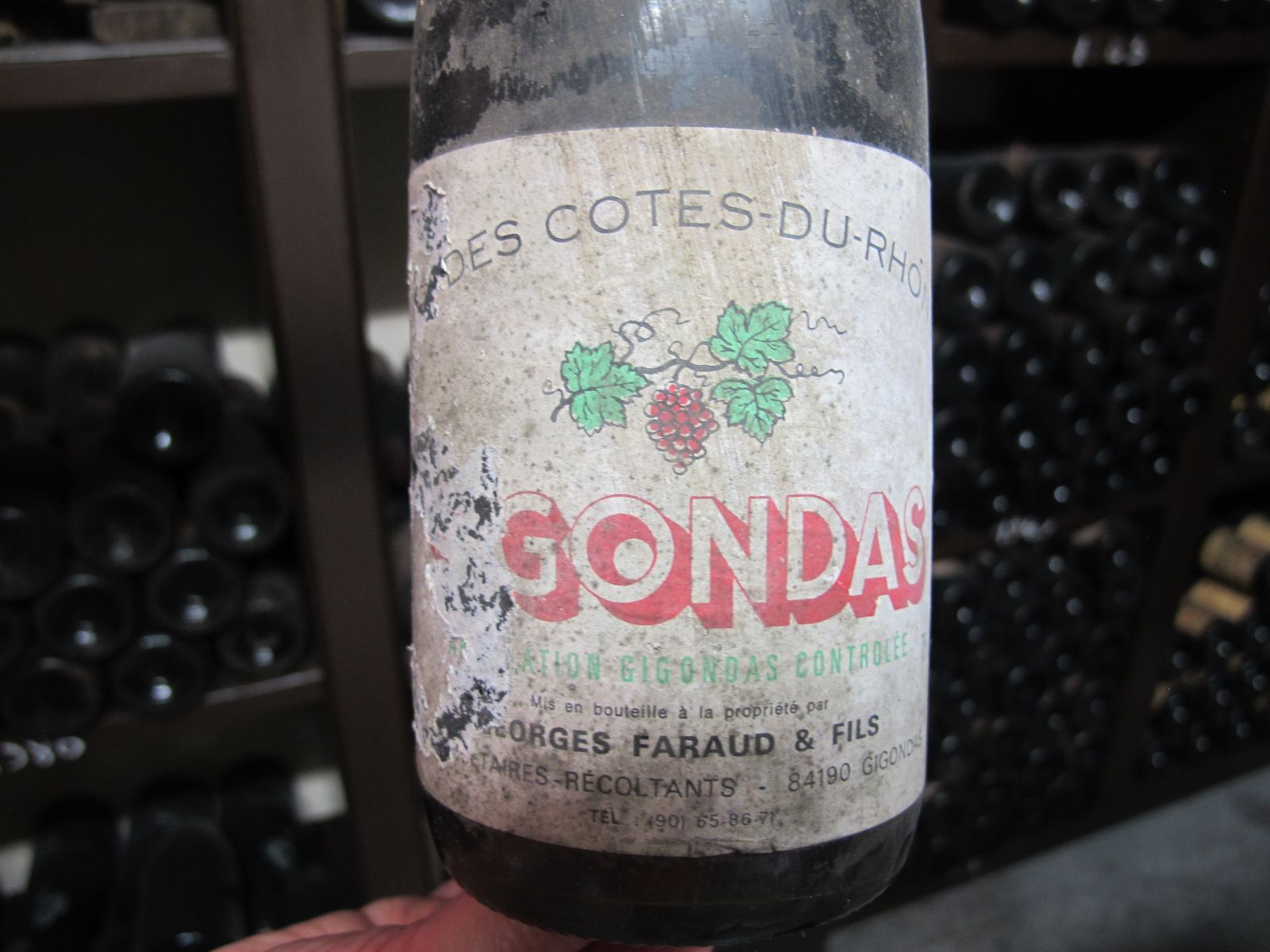
Domaine du Cayron Gigondas 1971 – still going strong. Credit: Matt Walls

Domaine du Cayron Gigondas 1971 - still going strong, Matt Walls 

Today, Grenache Noir makes up more than 50% of red plantings in all of the Côtes-du-Rhône and Côtes-du-Rhône Villages appellations and in all of the 10 Southern Rhône crus. It’s particularly dominant in Châteauneuf-du-Pape, with just over 70% of red plantings. It’s also the main red grape in three of the seven satellite Rhône Valley appellations: Ventoux, Grignan-les-Adhémar and Côtes du Vivarais.

Grenache in the vineyard 

Grenache thrives in hot, dry climates so it feels very much at home in the Southern Rhône. It’s an early-budding, late-ripening variety that is fairly vigorous; it is usually cultivated as a self-supporting bush vine (gobelet in French), though it can also be trained on wires to facilitate machine harvesting.

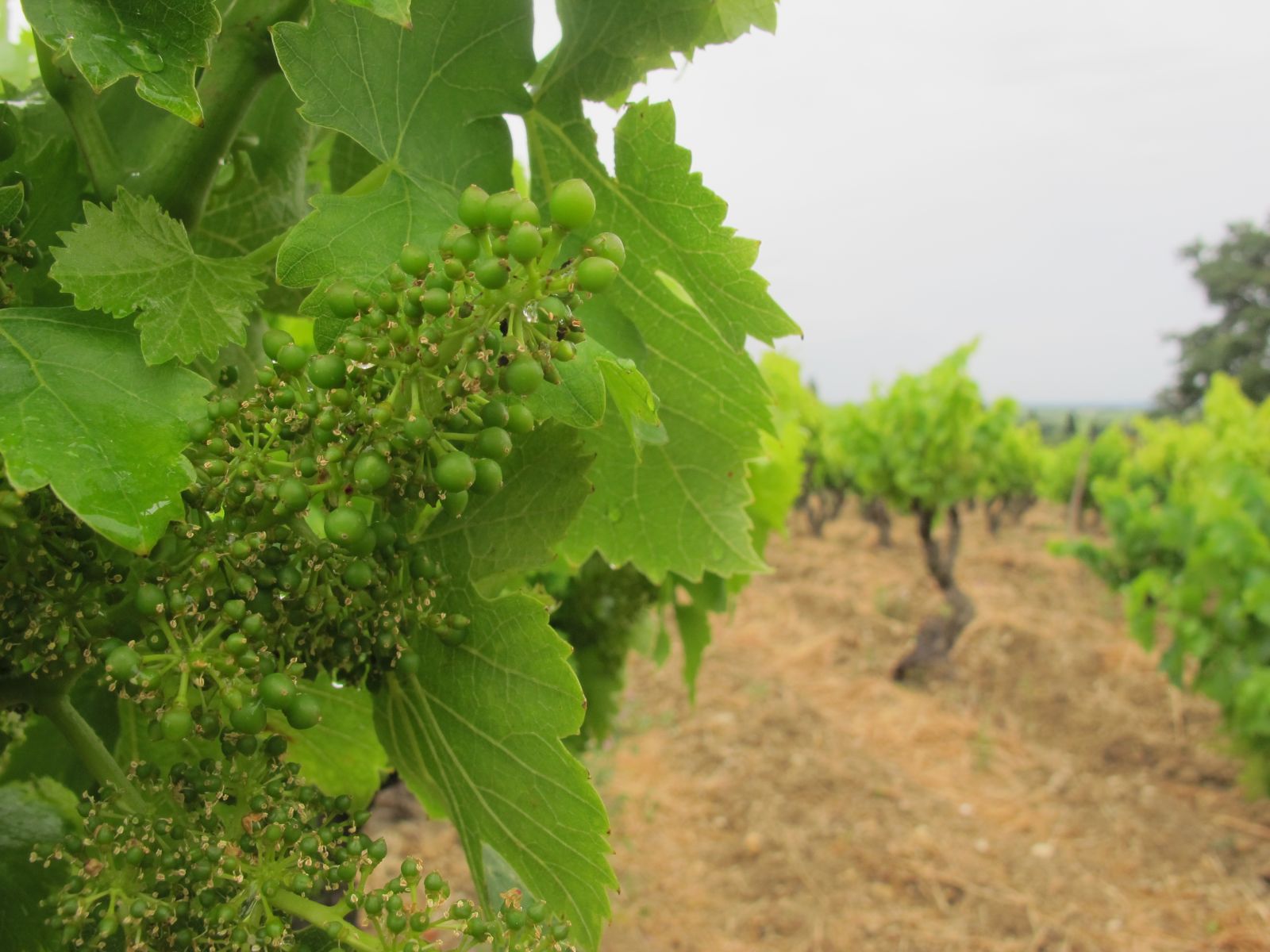
Baby Grenache grapes emerging in Cairanne. Credit: Matt Walls

Baby Grenache grapes emerging in Cairanne, Matt Walls

One of its main disadvantages is its susceptibility to coulure, when flowers fail to develop into fruit. This is triggered by adverse weather during flowering and can severely affect yields, but it doesn’t directly affect wine quality. Grenache is also prone to downy mildew and botrytis. Plants can be very long-lived; centenarian vines are not uncommon and there are even some rare examples that predate phylloxera.

When it comes to soil types, Grenache is highly adaptable. It grows happily on all Southern Rhône terroirs: stony galets roulés, clay, limestone and sand. The resulting wines often reflect this; galets roulés produce muscular examples, while sand bestows finesse.

Grenache in the cellar

The main criticism of Grenache is that it builds up high levels of sugar during ripening, resulting in wines that are high in alcohol. Fully ripe Grenache here is rarely under 15% abv. This needn’t be a problem if the wine tastes balanced, but it can result in wines that taste excessively alcoholic. It doesn’t help that acidity levels are only moderate and Grenache tends to produce full-bodied, rounded and slippery wines with plenty of gras(‘fat’).

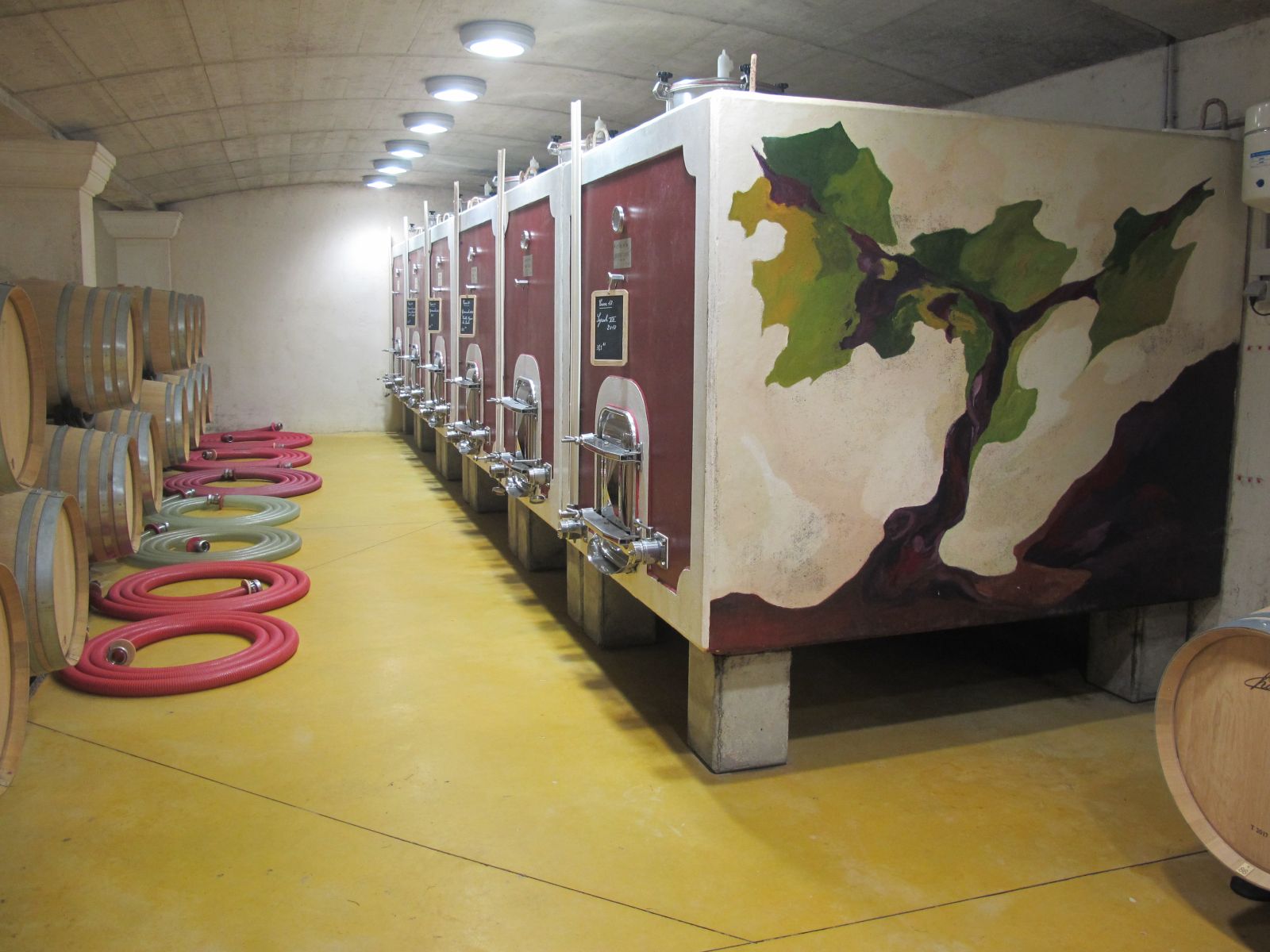
Another difficulty of working with Grenache is its tendency to oxidize. That’s why most winemakers prefer stainless steel, concrete tanks or large wooden foudres for fermenting and maturing wines. Small oak barriques can result in too much oxygen exchange; new oak can add excessive textural richness and sickly vanilla sweetness.

Concrete tanks and barrels in Château Bizard, Grignan-les-Adhémar. Credit: Matt Walls

Concrete tanks and barrels in Château Bizard, Grignan-les-Adhémar, Matt Walls

Tannic structures are highly variable depending on terroir, vintage conditions and extraction methods. Pure Grenache tends to have fine tannins that are felt all over the mouth; they can be almost imperceptible. At the other end of the scale, some old vine Grenache from La Crau in Châteauneuf-du-Pape can be fairly robust, particularly if bolstered by whole bunch fermentation. But Grenache is not typically a strongly tannic variety, nor is it darkly colored.

That’s why blending with Syrah and/or Mourvèdre is mandatory in most Southern Rhône crus, which brings additional structure, color and acidity. It’s a shame that more appellations don’t permit pure Grenache, however, as it can be delicious by itself. It doesn’t need to be darker or more tannic to be enjoyable.

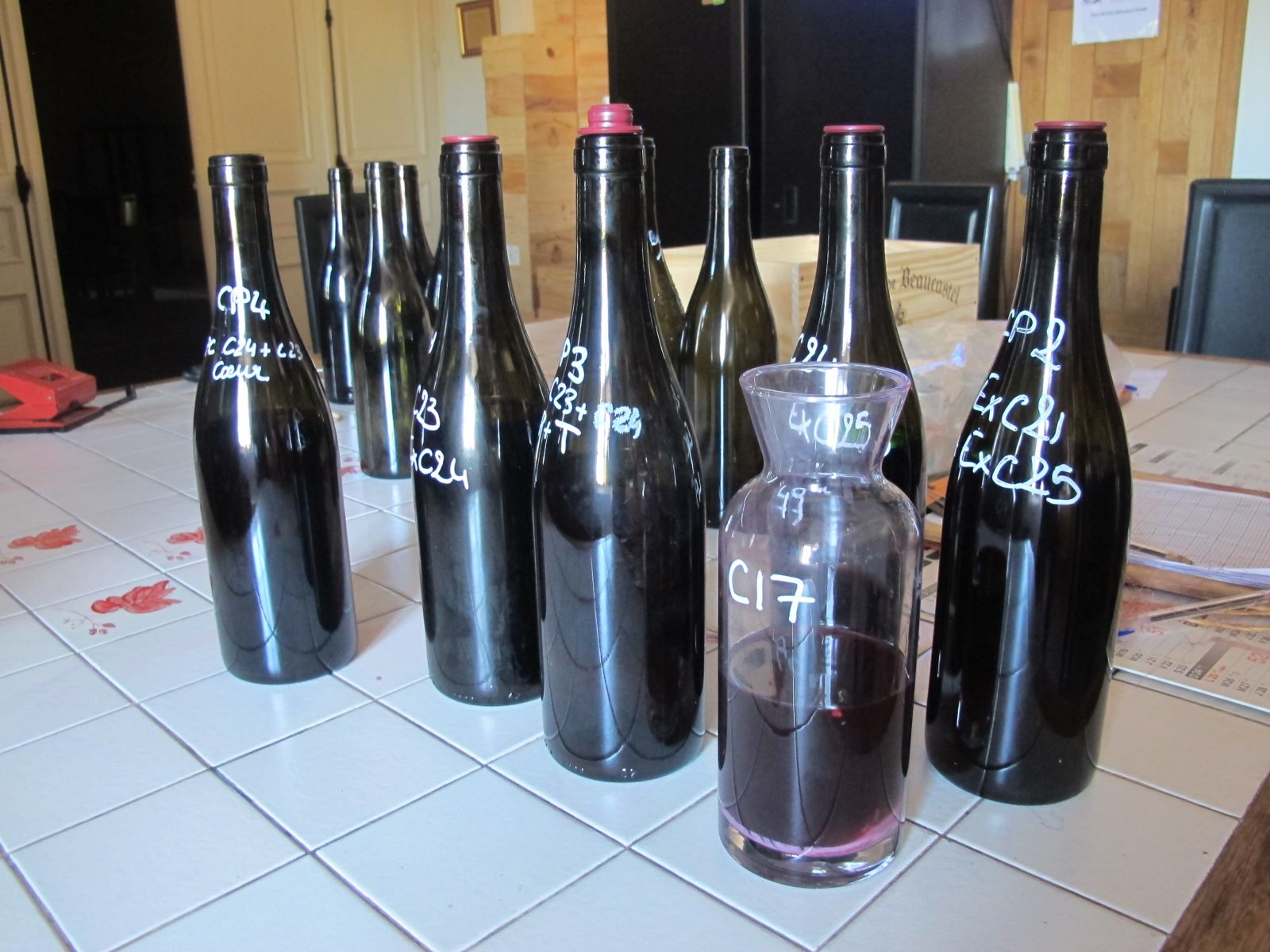
Blending experiments in Châteauneuf-du-Pape. Credit: Matt Walls

Blending experiments in Châteauneuf-du-Pape, Matt Walls

Vinified pure, Grenache produces red-fruited (strawberry, raspberry) wines with an impression of sweet ripeness on the palate. In the Southern Rhône, it often has notes of dried Provençal herbs (thyme, rosemary) and flowers (rose, violet). Pure Grenache Noir can be found in AOCs Châteauneuf-du-Pape and Gigondas; also, in local IGP or Vin de France bottlings.

Grenache Blanc is almost always blended with other grapes in the Rhône, which is more understandable, as this white-skinned version tends to be less characterful. It’s only mildly aromatic, with apple and sometimes floral notes. Its richness and body act as a canvas onto which more acidic and perfumed varieties can be drawn. Grenache Gris is reserved for use in reds and rosés, which is a pity, as it is arguably more suited to whites, producing wines with freshness and tension.  

Though the vast majority of Grenache is vinified dry in the Rhône, sweet vin doux naturel is made in all three colors in AOC Rasteau.

Grenache around the world

Starting in Aragon, Grenache has since been embraced by several Spanish regions, with notable examples coming from Rioja, Priorat and Sierra de Gredos. Then it travelled to Sardinia, the Roussillon, the Languedoc and the Rhône. It didn’t stop there: it’s widely grown in Provence, where it produces some of the world’s finest rosés. There are also significant plantings in California, Australia and South Africa.

Grenache has a long list of potential eccentricities, including high alcohol, extreme opulence and mild acidity. So making a fine, balanced wine from this variety is far from guaranteed. But it’s increasingly being recognized as a grape that, in the right hands, is capable of finesse, nuance, terroir expression and remarkable aging potential. That’s something to be thankful for. Because in a world that’s getting hotter, its journey around the globe may have only just begun.

WSG Regional Series

Matt Walls

Matt Walls is an award-winning freelance wine writer, author and consultant who contributes to various UK and international publications such as Club Oenologique and Decanter, where he is a contributing editor. He also judges wine and food competitions, develops wine apps and presents trade and consumer tastings. Matt is interested in all areas of wine, but specialises in the Rhône Valley – he is Regional Chair for the Rhône at the Decanter World Wine Awards.

Alongside his blog contributions, Matt brings his knowledge to the vineyard as a brilliant guide for WSG’s Educational Wine Tours.

Related Articles